Entries Tagged as ''

Holiday Drinks (that don’t suck): December 10 & 11

The generality of Christmas-keepers observe that festival after such a manner as is highly dishonourable to the name of Christ. How few are there comparatively that spend those holidays (as they are called) after an holy manner. But they are consumed in Compotations, in Interludes, in playing at Cards, in Revellings, in excess of Wine, in mad Mirth…

– Increase Mather, 1687

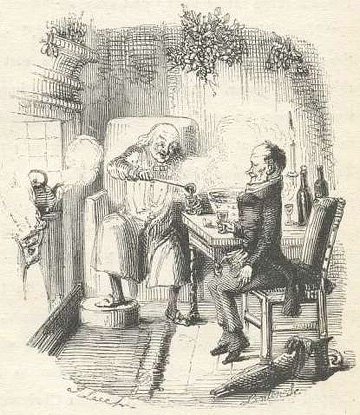
Smoking Bishop. Scrooge not invited.Now that the turkey carcass has been stripped clean, it’s officially the season for waffle-iron riots and fruitcake, for Salvation Army bellringers at the mall and for pepper spray at the Walmart, the time of year that’s the dominion of ugly sweaters and store-brand eggnog.

I can’t do a damn thing about softening our holiday-season hysteria, or the impending extinction of civility and good taste. But the crappy eggnog? That, at least, I can fix.

Here’s how I do my part: On December 10 & 11, I’ll be presenting a session as part of SwigWell Drinking Academy on Holiday Drinks (that don’t suck).

As tempting as it might be to simply set up rounds of Horny Ho Ho Mojitos, Noel’s Nooners and Candy Cane Martinis (by the way: I didn’t make up any of those things) on the bar and simply blast away at them with a candy-striped baseball bat, I’m more of the civilized (not to mention, clumsy) type, so I’ll take a bit of a different approach — in essence, my goal is to use the best of both classic and contemporary holiday cocktails to swamp the boat of horrible drinks that make the rounds at this time each year, so nobody (including me) has to go to a holiday party and endure being served a Christmas Cosmo or a Grinch (Midori, lemon, sugar — again, not making this up) ever again.

Plus, I’ll cover some of the history of holiday drinking (short synopsis: even the most boisterous of today’s Santarchy cells pale in comparison to the wassail mobs of Christmas past), and look at how what we drink and how we drink over the holidays has changed over the centuries.

And, in case you were wondering: we’ll be serving drinks! There will be rum, and brandy, and fire….
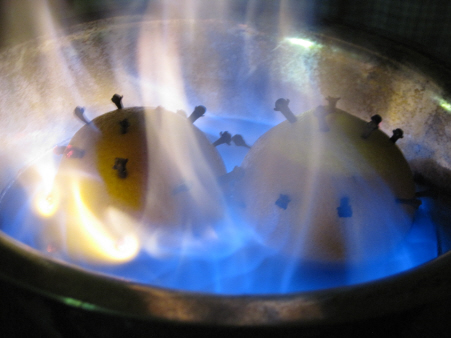
There’ll be two opportunities to catch the session: Saturday, December 10, from 1:30pm to 3:00pm at Rob Roy in Seattle; and Sunday, December 11, 1:30pm – 3:00pm, also at Rob Roy.

Plan ahead! Advance reservations are required. The price for each session is $75; to reserve a spot, visit SwigWell and provide your details.


Mixology Monday: Occupying the ‘Tini

I love the Appletini.

Mind you, I’ve never actually had one — not a “real” one, anyway, assuming you can call a drink that’s become an icon of all that’s saccharine and false about cocktails “real.” Even when I was younger and (more) stupid, when I was less picky about what went into my glass, a drink that both looked and tasted like Jolly Ranchers just seemed to be wrong, not only a fraudulent fake of a proper cocktail, but yet one more molestation of a natural flavor.

But as someone who makes his living writing about drinks, the Appletini has been a godsend, a useful tool for mocking all that’s wrong with bars, and an instrument of warning to those who are tempted to take the quick, easy way out. Plus, with the drink’s pioneering appropriation of the ‘tini suffix, the Appletini became a punchline in itself, a gaudy green scapegoat in a cocktail glass for craptinis everywhere. Long may it wave.

There’s a problem here, though. Y’see, for all its faults, an Appletini has one thing going for it: it tastes decent to a lot of people (so I assume — again, I’ve never had one, but it’s easy to come to that conclusion) — and why not? It tastes like apples (kinda, or at least what apples taste like as interpreted by food scientists), and apples are awesome. Even spirits actually made from apples don’t really, truly taste like apples (except on a certain ethereal, completely engaging level), thanks mostly to the effects of barrel aging — not that I’m complaining, of course. But, apples — why not? If you can take a drink that’s emblematic of all that’s fake in mixology, and render it in a natural way, isn’t that a worthwhile cause (or at least a potentially interesting way of spending a Monday evening)?

Fortunately, today is Mixology Monday, and as this month’s host Jacob Grier chose to frame it, this month’s event is themed “Retro Redemption.” Jacob’s challenge is to take a misbegotten concoction, preferably from recent decades, and tweak it into something appealing to the growing craft-cocktail crowd. And if ever a drink needed tweaking, it’s the Appletini.

So, here’s how I’m going to proceed: I’m going to take the Appletini at its most literal, and break it down by the constituent parts of its name — first, it has to have an apple influence; and second, it has to earn that ‘tini suffix.

My starting ground rule is that the drink’s base elements must be gin (vodka? really? are you in the right place?) and dry vermouth; bonus points if the orange bitters stay in the equation. And for the apple? It must be a natural component, something from an actual apple, not a mock-up of apple flavor or a processed apple product. Simply adding an ounce of apple juice or the like to the drink would be cheating on a certain level — my self-imposed rule stipulates that the drink must still be identifiable as a martini — but what if I process the drink through an apple?

We know from experience that apples and dry vermouth work fantastic together, as demonstrated in Audrey Saunders’ Eve — a simple five-day infusion of Macintosh apples in vermouth. Had I given this project much thought prior to the last couple of days, I might’ve smacked a bottle together, but by the time I started thinking about the apple + martini project earlier today, the infusion ship had sailed.

Or had it? No, I didn’t have five days for an infusion, but I had a few minutes — not to mention a couple of Granny Smith apples and an iSi cream whipper, which, by following the nitrogen infusion process first explored by Dave Arnold, was all I needed to do a flash-infusion of apples into my drink, and which hopefully would only bring the delicate, fruity notes of the fruit, without the darker, bitter flavors that come from oxidizing apples.

Okay, this post is way too chatty by this point — let’s get down to the recipe:

The Appletini is Dead! Long live the Appletini!
makes 3 drinks

  • 6 ounces gin (I used Plymouth)
  • 3 ounces dry vermouth (I used Noilly Prat)
  • 1 large (or 1 1/2 small) Granny Smith apple
  • 1 dash orange bitters
  • lemon zest, for garnish
  1. Core the apple and chop it, peel and all, into small chunks. Place the apple chunks in the canister of an iSi cream whipper, and add the gin and vermouth.
  2. Seal the whipper, and get your stopwatch ready. Use a N2O charger to pressurize the whipper, and swirl the contents around for 30 seconds; at the end of 30 seconds, place the whipper on the counter and let it rest an additional 30 seconds.
  3. Rapidly depressurize the whipper by placing a plastic container over the spout (to catch the spraying liquid) and squeeze the lever. Once the whipper is completely depressurized, strain the liquid into a large glass. Let it rest a few minutes before using — the flavor develops better with a little time.
  4. Proceed as with a standard cocktail: place three ounces of liquid in a mixing glass, add a dash of bitters along with a bunch of ice, and stir until chilled. Strain into chilled cocktail glass; hit it with the lemon zest.

This worked out better than expected. The liquid went into the canister a light straw color (from the vermouth), and came out a delicate, chlorophyll green. At first sip, the apple was barely noticable — it was all martini, with a softer, rounder edge.

But after the liquid rested a bit more, the apple flavor developed; the drink was still no fucking doubt a martini, but it had a lightly floral aroma, and a lingering finish that was had the bright, acidic crispness and the very gentle sweetness of a fresh Granny Smith apple. You wouldn’t sip this drink and have “apple” immediately leap to mind, but the fruit gradually manifested itself as a welcome addition to the martini’s familiar flavor — as though the bright freshness of the fruit was one of the botanicals in the gin or the vermouth, pronounced enough to be identifiable as a flavor, and definitely lending a soft, fruity caress to the drink, but not attempting to seize control of the drink’s character from its spirituous base elements.

Does it taste like a “real” Appletini? Hell, no. That’s why I’m still drinking it…

Anyway, that’s my MxMo contribution for this month. Head over to Jacob’s place and see what others have got up to for this round.

American Apple Brandy at Swig Well — Saturday, November 19

There are few compounds that are more sinful than the applejack of New Jersey. The name has a homely, innocent appearance, but in reality applejack is a particularly powerful and evil spirit. The man who intoxicates himself on bad whisky is sometimes moved to kill his wife and set his house on fire, but the victim of applejack is capable of blowing up a whole town with dynamite and of reciting original poetry to every surviving inhabitant.

– “A Wicked Beverage,” New York Times, April 10, 1894

You can learn a lot about a civilization by looking at what it drinks — and when that civilization is an early ancestor of your own, an exploration of the drinking habits can result in not only an interesting anecdote or two, but hopefully a better picture of who we are as a society.

In our early years, Americans drank pretty much anything that was available — but “available” is the operative term here. Our ancestors drank beer and wine, when it was available, which after the initial supplies ran out, wasn’t very often; soon, brandy and, more importantly, rum entered the picture, and eventually whiskey worked its way into the mix. But for much of America’s history, from the earliest Colonial days and for the more than two centuries that followed, Americans sated their thirst for beverages that conveyed a buzz mostly with libations that came from the fruit of the apple tree — primarily in the form of hard cider, which was EVERYWHERE and in tremendous quantities, but also in its harder, sharper and, at times, burly and boisterous relative: applejack, the distinctive American interpretation of apple brandy.

For a drink that so enamored our American ancestors (especially in the Northeast), we know awfully little about applejack and American apple brandy today. If your reading habits have brought you to this blog, you’re no doubt already familiar with Laird’s applejack and probably their bonded apple brandy, too, and you may even know of newer, small-scale producers somewhere (legal or, um, “artisanal”) who are making the stuff. But what else do you know about American apple brandy?

The answer, probably, is “not much.” A year or so ago, I was lamenting my own ignorance of a category that I still found pretty fascinating, so I started putting together bits of historical info that eventually made their way into my “As American as Apple Brandy” presentation at Tales of the Cocktail in July (where I was joined by another ardent fan of apple brandy, my good friend Misty Kalkofen, from Drink in Boston).

In case you missed my applejack schtick at Tales, there’s another opportunity coming up where you can see me get way too excited about this style of spirit that’s undergoing a bit of a comeback: on Saturday, November 19, I’ll be talking about American apple brandy as part of Swig Well: Seattle Drinking Academy, at Rob Roy.

Among the things I’ll babble about are bits of apple-brandy history such as:

  • In 1830, near the end of the farmstead epoch of American distilling, there were 430 distillers operating in New Jersey. Even after liquor production moved primarily to large, centralized distilleries, there were still approximately 60 distilleries in southern New York producing apple brandy in 1890, and in 1892, more than 70 distilleries in New Jersey produced around 13,000 barrels of the stuff.
  • Long ignored by the temperance movement, apple growers eventually came under Prohibitionist assault around the turn of the 20th century. The result? Thousands of apple trees were destroyed to disrupt the production of cider; facing this threat, apple growers embraced what became one of history’s most memorable marketing slogans: “An apple a day keeps the doctor away.
  • In anticipation of the demand that would follow Prohibition’s repeal, Laird’s & Co. announced in October, 1933, that they’d begun production of 1 million gallons of apple brandy—“for medicinal purposes.”

Oh — and there’ll be cocktails.

This is my first scheduled class at Swig Well, and while tickets are limited, I want to make sure every seat is full. The class is an hour-ish long (I get chatty sometimes), and takes place on the afternoon of Saturday, November 19 (I don’t have a set start time yet, but it’ll be between noon and 3pm) from 1:30pm to 2:30pm; tickets are $75 each.

Check out my original post about Swig Well, then head over to their site to see the syllabus and to sign up for tickets (you’ll need advance reservations — like I said, tickets are limited). And, while you’re at it, check them out on your social-media platform of choice: Swig Well on Twitter, and Swig Well on Facebook.

The PDT Cocktail Book

If last night’s Twitter traffic is any indication, I missed a hell of a party.

That’s to be expected. I’m home in Seattle, while the party in question — that for the release of Jim Meehan’s The PDT Cocktail Book – was, obviously, in New York, the way many of the parties I’m really envious of missing seem to be.

But the celebration was certainly justified. In addition to being one of the world’s more talented and influential barmen, and co-owner of one of the core bars in the craft-cocktail universe, Jim Meehan is now author of a cocktail guide that’s bound to be so definitive of a mixological moment and so influential for bartenders current and future that I can only agree with Gaz Regan (while conveniently stealing his words) that the PDT book is “the best book of its kind to hit the shelves in the twenty-first century. The very best. Bar none.” (Thanks for the help, Gary!)

Okay, details: there are more than 300 recipes in this book, all sourced from assorted manifestations of PDT’s menu. There are a few familiar classics of the Monkey Gland and French 75 variety, but where Meehan’s book not surprisingly shines is in its wealth of contemporary recipes, many from Meehan and his colleagues and associates, for drinks such as the hibiscus-and-tequila Green Harvest; Don Lee’s Rite of Spring, made with pickled ramp brine; and the apple brandy and beer-based Great Pumpkin.

I first tried the Great Pumpkin at PDT three years ago, and I brought a happy, hazy memory of this rich autumnal drink home with me. I got a chance to run a recipe for this drink in the San Francisco Chronicle about two years back, and now that the stores are once again flooded with pumpkin ale –something I have a hard time getting too enthusiastic about, except when it’s a component in mixed drinks such as this one — it’s a suitable time to take a look at the Great Pumpkin again.

Great Pumpkin
created by Jim Meehan, Fall 2008

  • 1 oz. Rittenhouse rye whiskey
  • 1 oz. Laird’s bonded apple brandy
  • 1/2 oz. grade B maple syrup
  • 1 whole egg, as fresh as possible
  • 2 oz. pumpkin ale*

Combine everything in a cocktail shaker and agitate to flatten the beer (it helps if you add the beer first, then splish it about to drive out all the bubbles so your shaker won’t pop open and spray booze and eggs all over the place). Shake well without ice to fully combine the ingredients, then add ice and shake like hell for 10 seconds. Strain into chilled fizz glass; top with grated nutmeg.

* Meehan recommends the pumpkin ale from Southampton; being in the PNW, I went with Elysian’s pumpkin ale, which worked pretty well.

The Great Pumpkin has a complexity of preparation that’s pretty much par for the course in the PDT Cocktail Book. While some of the book’s drinks call for bespoke ingredients — from simple preparations like house ginger beer or walnut-infused cognac, to more complicated items such as concord-grape shrubb, or tamarind puree — or for unusual ingredients that can take some work to track down, such as Boiron passion fruit puree or Abbott’s Bitters (though there are replicas now floating about), many of the drinks are relatively straightforward. Meehan frequently calls for particular brands of certain spirits or modifiers, which can be challenging if you intend to prepare that drink exactly according to the specifications, but if you exercise some flexibility with substitutes while keeping the drink’s final flavor in mind, a cocktail enthusiast with a reasonably well-stocked home bar should be able to tackle most of the book’s recipes.

And the drinks? Extraordinary. PDT has built a reputation as one of the world’s best bars not just because you have to go through a phone booth to get there and can get a hot dog with your Blood and Sand — the drinks developed by Meehan and his staff, which has included formidable talent such as Don Lee and John Deragon, are big in flavor, distinctive in character and reliably fantastic.

Here’s a very simple drink from Meehan that I mixed last weekend, and enjoyed very much: the Platanos en Mole Old Fashioned.

Platanos en Mole Old Fashioned

  • 2 oz. Zacapa 23 Centenario Rum*
  • 1/4 oz. Brizard Crème de Banane**
  • 12 drops Bittermens Xocolatl Mole Bitters

Combine ingredients in a mixing glass and fill with ice. Stir well until chilled, 20 seconds or so, and strain into a rocks glass with one large cube of ice. Garnish with a pinch of ground chili.

* Did I say be flexible? Zacapa works really well here, but if you absolutely have none in the house but you do have some Zaya lying around, it’ll get you there.
** More on flexibility—the only banana liqueur I have is Giffard Banane du Bresil, which ain’t too shabby and worked just great in this drink.

Anyway, I’m already running behind the release date on getting this post up, so I’ll can further chatter and leave it to you: grab a copy of The PDT Cocktail Book, and if you have particular luck with one or more of the recipes, let me know in the comments section.


  • Alcoholic Blog Directory