
Entries Tagged as 'Bourbon'

A look back at whisk(e)y season, Part I

Some people — okay, me — are of the mindset that brown booze is a year-round sort of thing, the kind of drink you keep in your glass on winter’s darkest evenings as well as summer’s brightest afternoons. But there are also people — okay, me again — who think that whiskey and other aged spirits are particularly well-suited for the cooler months, and make these spirits a staple of their October-through-April sipping, if for no other reason than to leave a few months open so all those gins, light rums and blanco tequilas in the liquor cabinet don’t start feeling neglected.

It’s been sunny and in the 60′s in Seattle, and this past winter was quite gentle in these parts, though snow and ice and traffic-snarling storms seem to have continued right up to Easter in other parts of the country. But with the season finally starting to shift, I thought I’d perform my semi-annual dusting off of the blog in order to tip my proverbial hat to some of my most reliable whiskies from this past season.

Note I didn’t write “essential whiskies” or “best whiskies” or “greatest whiskies you’ll never be able to taste” or any of such tripe (those ideas I save for my paid work– KIDDING! But not really…) —  but rather, these are whiskies that, over the past six months or so (with several making repeat appearances from winters past), have made it into my glass with such frequency that they deserve a generous pour of credit for keeping me from absolutely losing it during another gray, damp, moss-gathering Seattle winter.

I’m not listing anything exceptionally rare or expensive here — hell, some of these may come across as downright pedestrian — but especially during the winter grey, whiskey hour is regularly observed in my house, and if it was all Pappy 20 and Gordon & MacPhail selections around here, I’d be even more financially destitute than my questionable career as a booze writer already leaves me.

Anyway, here’s what kept me kicking during the bitter badness of the winter of ’12 – ’13; for the sake of readability and something resembling organization, I’m splitting this post in two, with the first covering American whiskies and the second, whiskies from Scotland and Ireland:
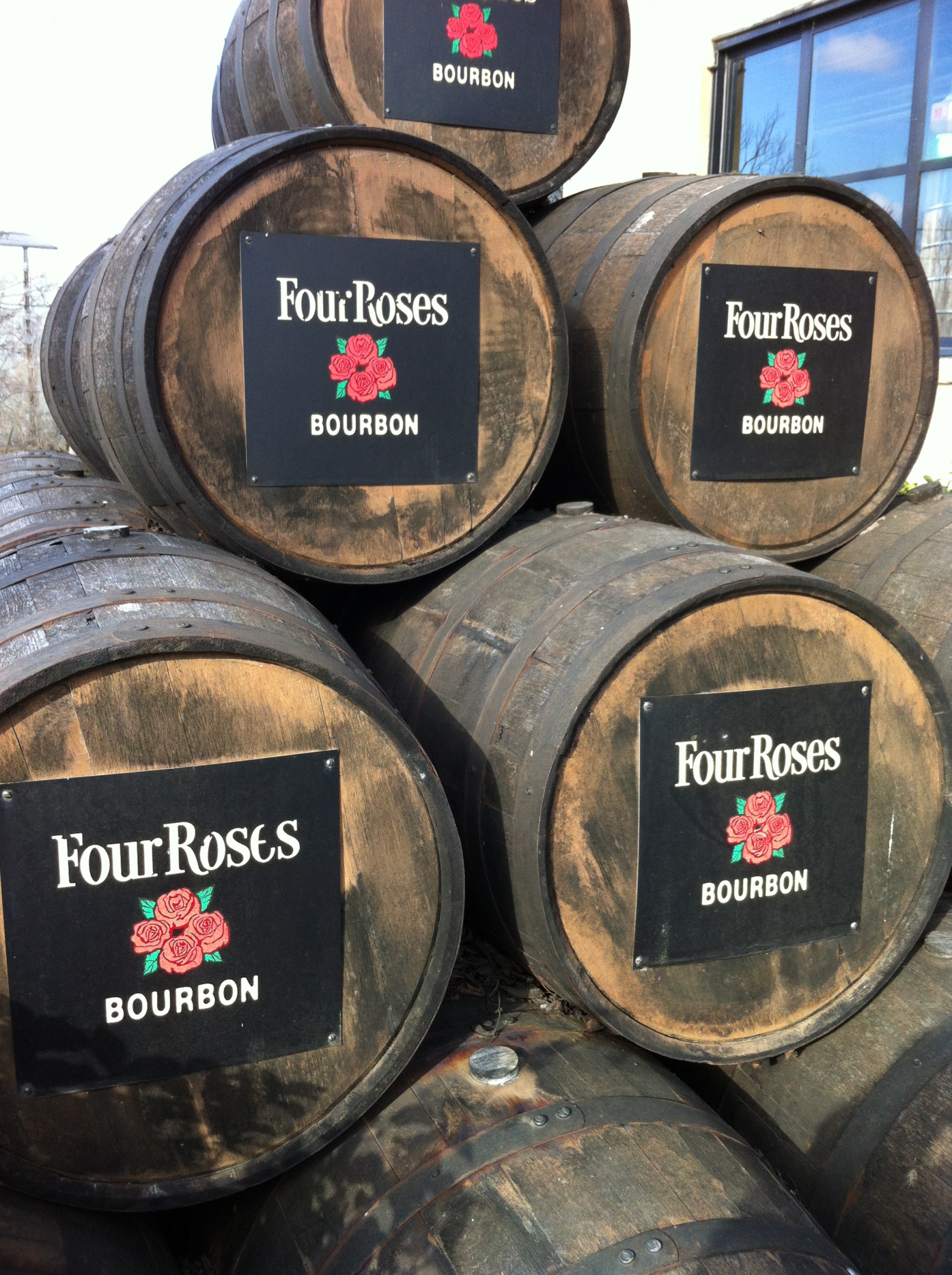
four roses* Pretty much anything from Four Roses – You couldn’t buy Four Roses straight bourbon 10 years ago — not in this country, anyway. But one of the best things to happen to bourbon drinkers in the century thus far is the grand American homecoming of Four Roses.

What makes Four Roses so notable? How the hell should I know; it could be the two mashbills they use (one rye heavy, and one, um, not), or their five yeast strains, or the way they take these 10 bourbon recipes and marry them (or not) to make everything from Special Edition Limited Barrels (single yeast strain, single recipe) to the Single Barrel (ditto) to the Small Batch (four of the ten recipes) to the Yellow Label (a little dab of everything).
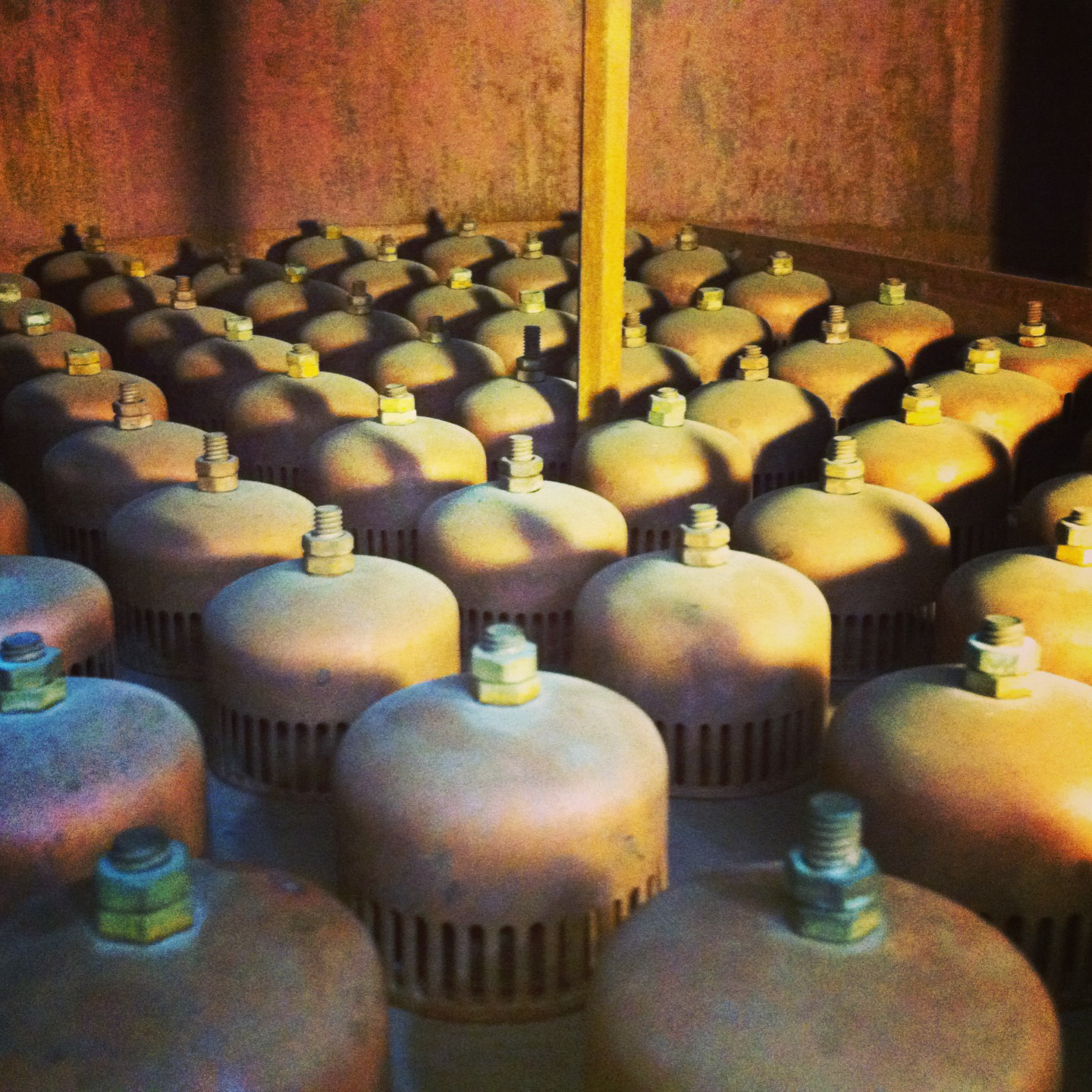
bubble caps on a column plate at Four Roses DistilleryAgain, how the hell should I know how they manage to pull flavor magic out of a pile of corn and rye — but whatever they’re doing, it works across their product spectrum, and the Four Roses Yellow Label is one of the few basic, entry-level (read: around $20 or less) bourbons I’ll drink all on its lonesome, though it does make a very comforting Old Fashioned. As far as the more premium bottlings — well, they’re just perfectly balanced, a nice mix of rye spice and corn sweetness with enough barrel influence to make it sugary and seductive without going over the hill into oaky astringency.

Four Roses? Anytime…

* Pretty much anything from Heaven Hill – Pretty much, that is; ignore the novelty items and the assorted vodkas, liqueurs and other spirits that help them pay the bills, and focus on the exceptional (and extensive) range of bourbons, rye whiskies and others (Mellow Corn! Bernheim Wheat Whiskey!) that Heaven Hill produces.
heaven hillI’ll admit to sentimentality about Heaven Hill’s whiskies: the basic Evan Williams black label was the first straight bourbon I ever purchased way back when I was … well, let’s not get into that; Elijah Craig has been my workhorse bourbon in god knows how many Old Fashioneds in recent years; and Rittenhouse Bonded Rye Whiskey is goddamn Rittenhouse Rye, world without end amen — but my fondness for their whiskies extends beyond mere sentiment.

Old Fitzgerald Bottled-in-Bond has been dueling it out with Four Roses Yellow Label for ownership of my “everyday bourbon” shelf for the past few years. Wheated bourbon is one of my many weaknesses, and Old Fitzgerald has that wheated softness that I find so sultry, with a little fillip of sourdough tang to keep the whiskey from lapsing into somnolence. Last year Heaven Hill introduced Larceny Straight Bourbon — exactly the same stuff as Old Fitz, but bottled at a different age and a different proof, which gives the old whiskey a fresh appeal — and I’ve been known to nip into that these past few months for the occasional Old Fashioned or Revolver Cocktail. The only problem with the arrival of Larceny is now I have to keep an additional bourbon stocked in my house at all times.
larcenyWhile both of these whiskies are still in the very modest $20-ish range, depending on where you live, Heaven Hill also delivers very well at the higher echelons of bourbon: Evan Williams Single Barrel is one of the best bargains on the bourbon shelf, a lovely sipping bourbon that flirts around the $30 mark; and to show how much they care (and what they can do), Heaven Hill has been annually releasing blockbusters under the Parker’s Heritage Collection label. Last year’s release, the “Blend of Mashbills,” spotlighted the diverse skills of Parker and Craig Beam, but my favorite so far has been the cognac-finished bourbon from a couple of years ago. Exceptional aged bourbon with the fruity kiss of cognac? That pretty much eliminates the need for me to ever make the choice again.

* Eagle Rare Single Barrel Bourbon – Yes, Buffalo Trace makes a hell of a lot of good whiskey, and everything from the distillery’s eponymous bourbon to Handy and W.L. Weller makes it into my glass every winter, but Eagle Rare is the one I start to sweat about when the supply is running low.

This is such a gorgeous, balanced whiskey at a cheapskate-friendly price, which is what I’m usually looking for when I’m about to make a liquor run and I’m going through my pockets looking for misplaced $20 bills. Chuck Cowdery recently pointed out that Sazerac has shifted Eagle Rare’s bottle proof in recent years; this may have happened before I started keeping it on hand (or maybe I just wasn’t paying close enough attention), but Eagle Rare still delivers a much more complex flavor and rounded character than you’re likely to find in any other bourbon at a comparable price.

– coming in Part II: The whiskies from Scotland & Ireland that got me through winter….

Beer? Bourbon? Oh, hell–make it both

I’ve been sitting on this recipe for a while.

This drink initially caught my attention last winter, while working on the (aborted) 60/30 thingy in which I tried to revive my own interest in this blog by writing about a whole hell of a lot of stuff. Writing about 60 drinks in 30 days over the busy holiday season proved to be, well, a stupid idea — but this drink, that I was holding in reserve but never got around to posting? Pretty much the opposite of a stupid idea.

The Weissen Sour comes from Kevin Diedrich, late of the Burritt Room in San Francisco; the drink appeared on an early menu for the bar, and during the course of talking to Kevin about other stuff I was writing last fall, I asked if it’d be okay to run the recipe for this drink. Kevin’s moved on from Burritt Room now (heading to Jasper’s Corner Tap & Kitchen, according to Paolo Lucchesi), and considering the beer-forward nature of the new place, this drink that combines bourbon with brew seems particularly fitting.

(Fitting for what? Well, today is Mixology Monday, an online cocktail thingy that’s been going on for more than five years now — anyway, this month’s event is hosted by Fred at Cocktail Virgin Slut, and for July’s theme, Fred chose Beer Cocktails — so, now the whole thing hopefully makes sense.)

When you come right down to it, the Weissen Sour is an amazingly simple drink: just a basic whiskey sour with the tweak of adding orange marmalade (if you’re playing along with the name game, I suppose that’s a tour through the Omar Bradley with a tip of the hat to the Marmalade Cocktail, though now it’s getting complicated) and orange bitters, then tossing the thing in a highball glass (with ice? I neglected to ask Kevin, so I went for it, though in hindsight it might have worked better with crushed ice rather than big cubes), and finishing it with a punch of chilled weisse beer.

As anyone with an occasional (or frequent) boilermaker habit can tell you, bourbon loves the hell out of a cold, crisp beer, and as we head into mid-July, few beers are crisper or more appealing than a decent weisse. For this drink, I used Maker’s Mark (wheated bourbon, wheat beer…) and Ayinger Brau-Weisse for the beer. I’m not sure if I wound up trampling all over Kevin’s original recipe for the drink, but I’m pretty pleased with the result: the gently sweet fruitiness of the marmalade is a great bridge between the richness of the bourbon and the flowery aromatics of the beer, and the mixture is simple enough that you don’t feel anything is going over the top.

Weissen Sour
from Kevin Diedrich

  • 2 ounces bourbon
  • 3/4 ounce lemon juice
  • 1 barspoon orange marmalade
  • 2 dashes orange bitters
  • chilled weisse beer
  • small piece of lemon, for garnish

Combine everything except beer and garnish in a cocktail shaker; smush the marmalade around to help it dissolve in the liquid, then fill shaker with ice and do what comes natural. Strain into highball glass (I filled mine with ice, but give it a try without if the idea of pouring beer over ice skeeves you out), and top with chilled beer.

And that’ll get you through a warm July evening.

That’s what I’ve got for this round of Mixology Monday. Be sure to head over to Fred’s place and see what other drinks folks have come up with this month.

60/30, #31-32: Cooling Cups and Dainty Drinks

I’ve always had a soft spot for older recipes, even when they haven’t worked out. For every eye-opening moment I’ve had with venerable drinks such as a Brandy Crusta or an Improved Gin Cocktail, there’s been an awkward pause after taking a sip of a gin punch (a version that didn’t work so well — there are others that do) or a yard of flannel. Time hasn’t treated much of the drinks world so well, but that’s as it should be — some drinks just don’t taste very good, and were made to be forgotten. Are they interesting from a historical perspective? Sure. But do they taste good? Hell, no.

So it’s with some measure of caution when I venture into old drinks books, but I long ago learned not to take recipes quite so literally. Yes, I try to hew to the original formulation as much as I can, and I’ll usually mix an according to Hoyle version of an old drink at first just so I know what I’m dealing with. But if vintage drinks function as windows into a bibulous past, it’s important to remember why those drinks were initially formulated. Some were designed as tonics or restoratives, others as aids to the appetite or digestion. But overwhelmingly, every drink ranging from prehistoric punches to contemporary cocktails has been designed for a reason: because it tastes good, and because it’s a flavorful way to efficiently get liquor inside you.

One vintage drink book I haven’t worked with all that much — primarily because I don’t own a hard copy, and have to rely on the version from Google Books (and I’m a sucker for hard copy, especially when it comes down to trying recipes) — is Cooling Cups and Dainty Drinks, by William Terrington. Published in London in 1869, Cooling Cups is of the same approximate vintage as that other leading text of classic mixology, Jerry Thomas’ Bar-Tender’s Guide. As its name implies, the book focuses primarily on that gauzy realm of drinks called “cups,” a category that calls punch its own but that also includes drinks made by flavoring and (sometimes) fortifying wine, beer and cider. While the book ventures somewhat into what we think of now as cocktail territory, with recipes for juleps, cobblers, a crusta and the like, we’re really talking mostly about larger-scale preparations.

As with any vintage drink guide, some of the recipes show their age, but you can see the underlying appeal of the drink through the creaky recipe. Here are two drinks that, as written, may not take you to many exciting places, but with a little fine-tuning, came out pretty well.

Let’s start with the easy one first: the ‘Tween Deck Cup.

‘Tween Deck Cup, or a Splitting Headache—

Put into 1/4 pint of rum 1/2 doz. crushed cloves, a little cinnamon, ginger, and nutmeg; strain in an hour, with pressure; add equal quantities of lime-juice, and 2 quarts of bottled ale.

Simplicity was the main appeal to me here, plus I’m a little enamored with booze-beer mixtures that work well. I kept mostly close to the original recipe, with a couple of significant exceptions: first, four ounces of rum to two quarts of ale? C’mon — at that point it’s just a glass of beer with a “does this taste funny to you?” air about it.

For flavoring, I followed the directions, except I used a few good chunks of stem ginger in syrup in lieu of fresh or dried ginger (why? because it tastes good, plus I had some), along with some whole cloves, coarsely crushed cinnamon sticks and a grating of nutmeg, all soaked in Zaya for a couple of hours, then strained. I made the beer-flavoring into more of a cocktail-style drink by shaking two ounces of the flavored rum with the lime juice and a little maple syrup (the other change, because otherwise it seemed just too acidic) with ice, then straining into a beer glass (I used a pilsner glass, as it seemed about the right size), and topping with a rich dark ale — maybe 3-4 ounces of beer, total, so the rum was still at the forefront of flavor. For the beer, I used Samuel Smith Winter Ale, what with it being Christmas-time and all, and this being essentially a spiced-rum drink, and the beer being the only thing that fit the bill currently in stock at my local store. So, to clarify:

‘Tween Deck Cup (updated version)
(makes two drinks)

  • 4 ounces rich rum – I used Zaya, but something like Zacapa or your other favorite big, dark rum should work well
  • 6 chunks stem ginger in syrup
  • 6 whole cloves
  • 1 cinnamon stick
  • Fresh-grated nutmeg – 6 scrapes or so, perhaps 1/8 tsp?
  • 2 ounces lime juice
  • 1/2 ounce maple syrup
  • Chilled rich ale

Muddle ginger in a soaking jar. Coarsely crush cloves and cinnamon and add to the jar with nutmeg and rum. Let soak for an hour or two, then strain. Shake the flavored rum with the lime juice and maple syrup; strain into two chilled beer glasses. Top with about 4 ounces (each) of rich ale.

And the verdict? Way, way better than I expected. Really, I thought this would be kind of “meh” and I don’t want to overstate things, because this won’t be my favorite holiday drink or anything, but really, it came out surprisingly good. The fresh spices came through better than any commercially produced spiced rum I’ve had (including the good ones), and the beer really meshed well, making this into kind of a more mature spiced rum and Coke, if that makes any sense at all. Anyway, I liked it.

And that was the easy one. Here’s where things got a little tricky, with a drink that doesn’t even have a name of its own.

Cider Cup a la Ensor, No. 4

Infuse in a gill of brandy, or whisky, 1 scruple of the essence of jargonelle pear (acetate of amyl), 2 dessert-spoonfuls of guava jelly, or quince; slice of cucumber, if desired, for a cool taste; quart of cider, bottle of perry, sugar to taste; add 3 bottles of lemonade or soda-water; ice up.

Okay, the thing that really got my attention here is the mention of “quince”. Like certain other people, I’ve become a BIG fan of quince brandy in recent years; even though it takes me a year to make a batch (though you can probably get somewhere passable within a couple of months), the combination of cognac and quince is almost aphrodisiacal to my palate. But, look at that train-wreck of a recipe — where to start?

Okay, I lobbed the spoonfuls of jelly in favor of using quince brandy for the base (if you didn’t have the foresight to prepare your own starting this time last year, then go with regular cognac and a barspoon of quince paste), along with an equal measure of bourbon, for more oaky depth. Lacking essence of pear, I opted for a lovely, lush German pear liqueur from Pur Spirits — this is without a doubt my favorite pear liqueur, with the ethereal flavor of pear eau de vie and the sweetness of fresh pears, a delicate liqueur but still with enough gumption not to immediately fade in flavor when confronted with other ingredients; really outstanding.

I added a little lemon juice, to compensate for what was becoming a sweet drink, and used honey syrup in lieu of sugar; also, for a little touch of spice, I added two dashes of The Bitter Truth Jerry Thomas Decanter Bitters. Finally, after shaking all that with ice, I strained into a cocktail glass and topped with maybe an ounce of chilled dry cider — I used Samuel Smith (again — based on availability, not necessarily preference; would be curious to try with other styles) — so think of this as a distant autumnal cousin of the French 75.

This was the drink I served on Thanksgiving; I think it worked well, with excellent flavors of pear, quince and apple, and a nice seasonal flavor without going overboard with cinnamon and other baking spices. If anybody wants to go all the way out there and mix one, please do let me know what you think.

Cider Cup a la Ensor, variation

  • 3/4 ounce quince brandy (substitute cognac)
  • 3/4 ounce bourbon
  • 1 barspoon quince paste (omit if using quince brandy)
  • 1/2 ounce lemon juice
  • 1/2 ounce Pur Spirits pear liqueur
  • 1/4 ounce honey syrup (equal parts honey and water)
  • 2 dashes The Bitter Truth Jerry Thomas Decanter Bitters (or substitute Angostura)
  • – chilled dry cider

Combine everything except cider in a cocktail shaker and fill with ice. Shake well until chilled; strain into chilled cocktail glass. Top with 1-2 ounces chilled dry cider.

I’m guessing there are about two people on earth who might actually try these recipes (and that’s a fairly generous guess), but if you decide to give either or both a try, please let me know.

60/30, #21-22: Brown Derby & Honey Fitz

Two nearly identical drinks, born decades apart, both worth visiting (or revisiting) for their simple deliciousness. I’ll make this quick.

First, the classic: the Brown Derby. Vendome Club, Hollywood, 1930s; Douglas Fairbanks at the bar. We don’t even know what class is anymore.

Brown Derby

  • 2 ounces bourbon
  • 1 ounce fresh grapefruit juice
  • 1/2 ounce honey syrup

Shake with ice, strain into chilled cocktail glass. For honey syrup, mix equal parts honey and hot water, stir until honey is fully dissolved.

I sometimes go for a year between Brown Derby cocktails, and every time I do I wonder why it’s been so long since the last time I had one. While rye is shouldering its way back into cocktail prominence, this drink is more relaxed, with the richness of honey, so the casual sweetness of bourbon is right at home. The drink is so easy to make, and the flavor is nothing elaborate, but neither is that of a daiquiri or a margarita, and how often do you visit those wells? I mixed a Brown Derby last night; remind me before another year passes that I should come back to this one again soon.

Next: the newcomer. I completely missed the Honey Fitz at Tales of the Cocktail this year. Created by Jackson Cannon from Eastern Standard in Boston, the Honey Fitz is a nod to Boston’s political heritage: John F. “Honey Fitz” Fitzgerald was a congressman and mayor of Boston this time last century, and grandfather to JFK, RFK & EMK.

I didn’t make it to the Diageo Happy Hour at Tales this year, so I didn’t have a chance to try the drink from Jackson, so I had to wait until I was back home to come across the recipe. Fred blogged about this drink back in August, and the recipe was carried into Zig Zag one night by Alex, a local cocktail geek and a regular. One night at the bar, Alex introduced me to the Honey Fitz, for which I owe him my undying gratitude.

Honey Fitz
created by Jackson Cannon, Eastern Standard, Boston

  • 1 1/2 ounces Zacapa 23 rum
  • 3/4 ounce fresh grapefruit juice
  • 3/4 ounce honey syrup
  • 2 dashes Peychaud’s bitters

Shake, strain, cocktail glass.

Zacapa was practically made to be mixed with honey. Already rich and luscious, the rum merges perfectly with the musky tang of honey. Grapefruit seems less acidic than lime or lemon, which would have given the drink a sharper edge, but the grapefruit leavens the sweetness just enough, while rounding out the flavor and giving the drink some brightness. It’s somewhat sweet, true, but not cloying or syrupy; the Honey Fitz is just extremely tasty and goes down way too easy.

60/30, #3-4: City of Angels

A few years ago at Tales of the Cocktail in New Orleans, I ran into a little bit of an issue.

I was working a couple of events — participating on an absinthe panel with Gwydion Stone from the Wormwood Society (and later Absinthe Marteau) and with Jim Meehan from PDT, and later on hosting a dinner with Jim — but we were short-handed when it came to mixing drinks for all the guests. Fortunately, two bartenders I’d never met before stepped up and volunteered to help at both events, and they proceeded to bang out cocktails by the hundreds, leaving everyone happy and buzzed. After we’d thanked them for saving us from what would likely have been an angry, sober mob, they invited me to check out the gestating cocktail scene in their city. Great things, they told me, were afoot in Los Angeles.

At the time, LA was considered a mixological wasteland by most people on the cocktail circuit, and almost the only Los Angeles bar I’d heard anything good about was Tiki Ti, though I’d heard through friends like Chuck Taggart that something was going on at a place called The Edison, and that a private club called The Doheny was worth looking into. Today, of course, everything has changed, LA’s craft bars and bartenders are making up for lost time, and the bartenders who came to our aid that summer — Marcos Tello and Eric Alperin — are at the center of the city’s cocktail revival. I’ll spare you the longer story of what’s been happening in LA — for that, there’s a piece I wrote for Imbibe (pdf) last summer, as well as great blogs like Thirsty in LA and Los Angeles Cocktail Community — and instead pitch a couple of drinks your way that these guys have since put on the map.

The Los Angeles Cocktail came out of the Hi Ho Club in Hollywood during the 1930s. The club’s signature drink was a mix of gin and white port with a dash of orange bitters — haven’t tried it, but plan to — but this drink was adorned with the name of the city, which is quite an awesome responsibility for such an odd little number. Here’s what’s confounding about the Los Angeles Cocktail (which I initially wrote up for Imbibe): first, it’s made with a base of bourbon rather than rye whiskey, an atypical move for whiskey cocktails from that era; second, it combines sweet vermouth with lemon juice, which you just really don’t see all that often (though there are a few exceptions); third, it throws a whole egg into the mix, which along with the citrus and the vermouth is, in my humble opinion, absolutely bizarre.

But, it works. The oldest printed reference to this drink I found was from Trader Vic’s Bartender’s Guide from 1947 (but to be honest I didn’t perform a full booze-library excavation; with 60 drinks to cover in 30 days, I’m being economical with my time) (*UPDATE: from the comments, Erik Ellestad teaches me not to be lazy; the drink also appears in the “Savoy Cocktail Book” from 1930 and in “Here’s How” by Judge Jr., from 1927 — which is all the more embarrassing since Savoy is usually one of the first places I check; I’d just assumed the book predated the drink), and that version calls for a mere dash of vermouth. Marcos Tello tinkered with the formula, boosting the vermouth to a full half-ounce, and calling for the big flavor of Carpano Antica, which is possibly the only sweet vermouth capable of making its presence felt in such a wild drink. Marcos also uses Elijah Craig 12-year-old for the bourbon, which is a favorite around my house; left to my own devices, however, I’m reaching for something in the bonded-or-better neighborhood so the extra firepower will keep the bourbon’s flavor from receding – something like Old Fitzgerald if you still want to go smooth and lean, or Old Granddad bonded for a bit more spark, or you can just say what the hell and beat the crap out of the other ingredients with a dose of Old Weller 107, Old Granddad 114 or, if you want to get more modern with the brand, hit it with some Baker’s. In think it’s absolutely okay to go this route; it’s vermouth, it’s used to being pushed around.

Los Angeles Cocktail
Adapted by Marcos Tello

  • 1 1/2 ounces bourbon
  • 1/2 ounce sweet vermouth (Carpano Antica preferred)
  • 1/2 ounce simple syrup
  • 1/2 ounce fresh lemon juice
  • 1 dash Angostura bitters (can be skipped if using Carpano)
  • 1 whole egg
  • Fresh nutmeg and a total absence of fear, for garnish

Combine everything except garnish in a cocktail shaker and shake, without ice, for at least 10 seconds, until the egg has been suitably smacked around and is mixing well with everything else. Add ice to the shaker and shake again, very hard, for at least 10 seconds. Strain into a chilled wine glass or sour glass and garnish.

A more contemporary cocktail that’s also a native Angeleno is the Skid Row, from Eric Alperin, who now helms The Varnish. I wrote about this drink a little over a year ago for a gin article (pdf) that appeared in Imbibe, and it’s also been blogged about by Chuck Taggart and by Keith at The Speakista, among other folks.

I say it’s contemporary — sure, it’s of recent provenance, but the flavors of this drink are all vintage. Constructed with a rich, malty base of Bols genever, the Skid Row matches the unctuous richness of apricot liqueur with the bitter-citric nip of Ramazzotti Amaro. Snap an orange peel over the drink (Alperin flames the oils, for that floor-show experience and that smoky, caramelized thing) and you’ve got a giant bucket of flavor in a little bitty glass.

Skid Row
Created by Eric Alperin

  • 2 ounces Bols genever
  • 1/2 ounce apricot liqueur (Rothman & Winter’s the way to go here)
  • 1/2 ounce Ramazzotti Amaro
  • 1 dash Fee Brothers orange bitters
  • Flamed orange zest, for garnish

Combine ingredients in a mixing glass and fill with ice. Stir well until chilled, about 30 seconds, then strain into chilled cocktail glass. Using a wide swath of orange zest (a vegetable peeler really helps here) and a lit match or non-stinky lighter held just above and adjacent to the drink, briskly squeeze the zest so the oils spray through the flame and over the surface of the drink; use as garnish.

Anyway, these two fine gentleman did me a great kindness several years ago, and it’s been my pleasure to see good things come their way since.

  • Liquor.com - Your expert guide to all things cocktails and spirits.
  • Archives

  • Subscribe via e-mail

    Enter your Email


    Preview | Powered by FeedBlitz
  • Categories

  • Support