
Entries Tagged as 'Irish Whiskey'

A look back at whisk(e)y season, Part II

Yesterday, I launched into a wandering and long-overdue meditation on the whiskies that, for me, made the long, grisly winter of ’12-’13 endurable. Yesterday’s post covered bourbon; today, it’s all about the Scots and the Irish.

When looking back on brown-booze season, it wasn’t all a bourbony blur around here. These are a few approachable, available and affordable whiskies that helped me span the gap between October and April.
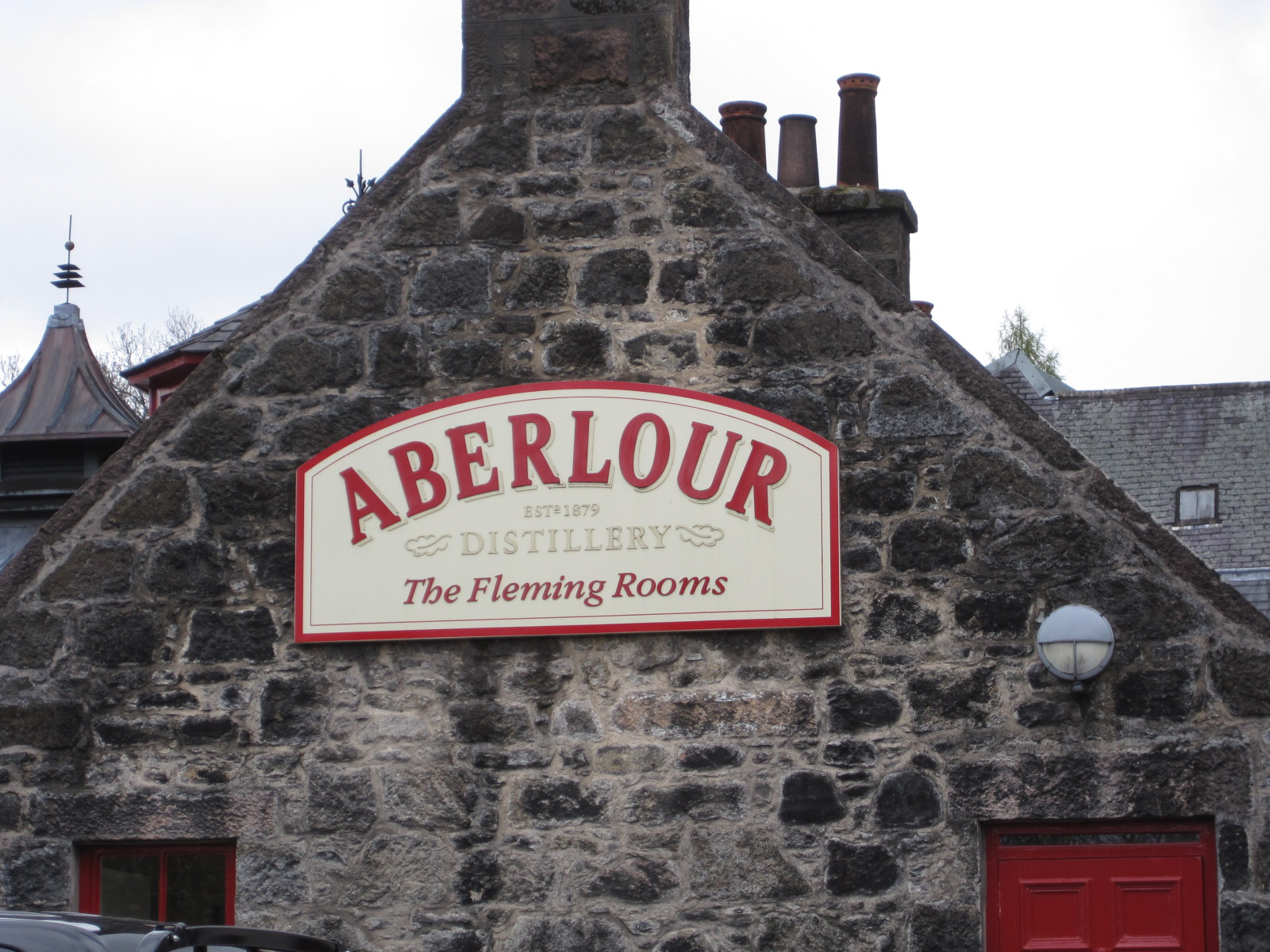
* Aberlour A’Bunadh –  I was pitifully ignorant of Aberlour before 2012, but the happy coincidence of a visit to Seattle by Aberlour brand ambassador Ann Miller, and a visit of my own to the distillery last spring, made me a fan of this whisky.

The 10 year is a perfectly agreeable Speyside malt, a mix of whiskies matured in bourbon casks and olorosso butts (the same goes for its older kin), but A’bunadh is where Aberlour really shines: cask-strength, un-chill-filtered and entirely sherry aged, the whisky is silky and rich, with touches of chocolate and cherries and honey and all those reassuring flavors that remind you that, even in the depth of a blustery winter, liquid compassion can still be found.

* Dalmore 18 – A few years ago, I spent a day driving across the Scottish Highlands in a van with Richard Paterson, the master blender for Whyte & Mackay who deserves much of the credit for this whisky’s nonstop deliciousness. We drove from Edinburgh to the Dalmore distillery, blurry and beaten (at least I was) from a long night of oversampling the Dalmore Mackenzie expression. At the Dalmore, we tasted a handful of whiskies (including a particularly rare one that Richard dispensed by the dropper), poked around in the barrel warehouses, then skedaddled back to Glasgow before nightfall.

My head still faintly aches from that first, long night, but what I recall from the journey — and the reason the Dalmore 18 has earned a spot in my regular winter rotation — is the whisky’s oily lushness, its balance of coarse earthiness and bold fruit. All of the expressions of the Dalmore have this to some extent, but the 18 walks a particularly fine line between the soft nature of wildflowers and honey that you find in so many Highland malts, and the blustery ruggedness that’s bold enough to bolster you through the worst winter days, while retaining enough freshness of spirit to remind you of better times to come.

Bourbon is for shaking off the chill and settling into the comforting warmth indoors; malts like the Dalmore 18 help you pull the coat more tightly around your shoulders, and tell the wind and rain that they can just fuck off for today.

* Pretty much anything from Highland Park – Highland Park is the most Game of Thrones of whiskies.

Think about it: They’re making whisky at the northernmost distillery in Scotland, so they’d better know a thing or two about dark and cold and how to keep them at bay. Highland Park’s answer is to lace the spirit with just a mild lashing of smoke — not enough to make the whisky a brawling brute like the peaty bastards from Islay (though there’s plenty of room for those in winter, of course) — but enough to blow a little air on the embers of a drinker’s insides, a bold (but not too much) shove back against winter that can fan the flames in mind and body while soothing the season’s restlessness with honey, and grass, and toasted nuts and fruits.

My mainstay this past winter was the basic HP12. Why the 12 year? Because it’s what I have, and it works, and I can afford it. Go for the higher range if your inclination and your wallet allow — there is no disappointment to be found here.

* Redbreast 15 year – Because when St. Patrick’s Day rolls around, green beer is for suckers.

Redbreast has a lightness of character like the rest of its Irish brethren, but it also knows how to land a punch, its gentle flavors of honey and grass matched with a robust oiliness. Redbreast 15 year is as comforting as having breakfast with your grandmother, but as serious as having breakfast with the grandmother who can kill a mouse by flinging her shoe across the room at it without taking her eyes off the story she’s reading to the kids.*

(* actual example from my actual grandmother, who to the best of my knowledge never drank a drop of Irish whiskey.)

California Bound

In just over a week I’m headed to San Francisco to attend a whisk(e)y-lover’s dream event, WhiskyFest.

WhiskyFestHow could you not want to go to something called “WhiskyFest”? And if the name alone isn’t enough to bring you running, consider this: the pouring list offers more than 200 different types of whisk(e)y, from Aberlour and Ardbeg to Van Winkle and Woodford Reserve (and if you need a break from whiskey, there’s also Martin Miller’s Gin and Appleton Estate rums, among other diversions). Add to that a speaker’s list that includes Parker Beam from Heaven Hill, Fred Noe from Jim Beam, Ian Millar from Glenfiddich and John Campbell from Laphroaig, and you’ve got a pretty full evening.

That’s right — it’s one night only, on Tuesday, October 23. Presented by the good folks at Malt Advocate, WhiskyFest is pretty well established in New York and Chicago, but this year marks the debut of the event on the West Coast. If you’re going to be anywhere near the Bay Area next Tuesday, be sure to check this out — it takes place at the Hyatt Regency at Embarcadero Center, and tickets are available online.

I’ll be trying to take in everything on Tuesday night, but I’ve also worked a little personal time into the program, for visiting a few bars and stocking up on supplies at the local liquor boutiques. If you’re in town on Monday or Tuesday, you may bump into me at Alembic, Cantina or Bourbon & Branch, or any of the other places I’ve been yearning to try. I’m pretty easy to spot — I’ll be the guy sponging a drink off you while obsessing about the kind of rye the bartender is using. And you thought I was just pretending to be a geek…..

Cameron’s Kick

Remember the old saw about how, if you took a million monkeys and gave them each a typewriter, they’d eventually come up with the works of Shakespeare? Well edit “typewriter” to read “cocktail shaker,” and stick the monkeys in a well-stocked bar, and the banana-addled mixologists would come up with a Cameron’s Kick in about the same amount of time it’d take that set of simian scribes to work their way around to Titus Andronicus.

Along with other head-scratchers such as the Blood & Sand, the Floridita and the Last Word, the Cameron’s Kick has a distinctive air of the implausible about it. With two (related, though still very different) base spirits in equal measure matched with lemon juice and — of all things — orgeat in the sweetness role, the Cameron’s Kick seems like something that no bartender would ever intentionally put together, and it’s a mix that, for all reasonable purposes, just –shouldn’t — WORK. But somehow, it does.

This cocktail first pops up (to the best of my knowledge) in Harry Craddock’s Savoy Cocktail Book from 1930. Craddock doesn’t list the bartender behind the Cameron’s Kick (or the basis for the weird name), so it’s left to us to wonder if the creator was blessed with divine inspiration, or was maybe just tossing stuff together like a bunch of monkeys trashing a bar. I’d come across the recipe a number of times while browsing the book, and kept ignoring it, put off by the use of two spirits in the base — two notoriously difficult-to-mix-with spirits, at that — and the funky-sounding recipe. Chances are, I’d still be neglecting this drink if David Wondrich hadn’t resuscitated it for Killer Cocktails, and served it to the assembled guests (myself included) during the Spirited Dinner he hosted at the most recent Tales of the Cocktail. Wondrich uses Craddock’s recipe, with the addition of a piece of orange peel for garnish. It’s a nice touch, and lends a hint of freshness to this long-forgotten drink that deserves to be discovered all over again.

Cameron’s Kick

  • 1 ounce Scotch (blended, please — Famous Grouse works well)
  • 1 ounce Irish whiskey
  • 1/2 ounce fresh lemon juice
  • 1/2 ounce orgeat

Shake with ice and strain into chilled cocktail glass. Garnish with orange twist.

Of course, not everything with the Cameron’s Kick can be as easy as it looks — search for the recipe on cocktaildb.com or any of a number of other web sites, and you’ll find a similar though very different recipe, one that uses the Scotch and Irish base (in different proportions), but then swaps the orgeat for orange bitters. In a word, no.

Ixnay on the Een-gray Inks-dray

Every March, around the middle of the month, I feel the need to apologize to Ireland. On the day reserved for honoring the land’s patron saint, it’s become an American tradition to pay an outlandish cover charge to stand in an overcrowded bar, holding plastic cups of green-tinted lager and being jostled all night until a Miller Lite-swilling fratboy vomits on your shoes.

Even drinkers who celebrate in more upscale bars sully the holiday with bad, bad drinks. For proof, look no further than the drinks in this week’s Seattle Times “Cocktailing” section: the “Irish for the Day” (vodka & green creme de menthe, with a clover carved out of lime peel as garnish), and the “Leprechaun Mor-jito,” again with the dreaded green liqueur (“We serve it straight up with green crème de menthe, and for a garnish it’s got a mint leaf. It’s kind of like a martini/mojito/leprechaun,” says the bar manager).

I’m sorry, sons of Erin–it never should have come to this.

Fortunately, though, there are options for holiday-appropriate cocktails that don’t require stooping to the mixologically morbid. All of these examples employ Irish whiskey; two are simple variations on an Irish Manhattan, and one is a newer entity which is worth getting to know.

Emerald

2 ounces Irish whiskey
1 ounce sweet vermouth (or less, to taste)
2 dashes orange bitters

Stir with ice & strain into chilled cocktail glass.

There are plenty of drinks called the Emerald, but this one is the most agreeable. From the recipe, it may sound simple and unexceptional, but don’t just write this one off– the orange bitters join in an unusually simpatico relationship with the Irish whiskey, making the Emerald much more than just an alternate Manhattan.

A similar drink, with a much different flavor, is the Tipperary (Gary Regan’s thorough write-up of this drink appears in today’s “Cocktailian” column in the San Francisco Chronicle). Dating back nearly a century, the Tipperary is also related to the Manhattan, but uses green Chartreuse instead of bitters to throw the taste in a more brooding, complex direction. The original recipe used equal parts Irish whiskey, sweet vermouth and Chartreuse; Gary dries it out a bit with this recipe. (And if you feel like you just have to drink something green because it’s St. Patrick’s Day, the touch of Chartreuse adds an emerald sheen to the glass, without making it appear as though you’re imbibing a glassful of Scope.)

Tipperary

2 ounces Irish whiskey
1 ounce sweet vermouth

rinse chilled cocktail glass with green Chartreuse and discard excess; stir whiskey & vermouth with ice and strain into Chartreuse-coated glass.

A final Irish whiskey cocktail worth discovering is of a more recent vintage: the Weeski, an original drink from David Wondrich’s Killer Cocktails. Wondrich matches the tempermental flavor of Irish whiskey with the equally difficult-to-mix-with blonde Lillet. Using a bit of Cointreau to bind the flavors together, and a little orange bitters to give it greater depth, Wondrich has created a cocktail that’s worth the price of the book.

Weeski

2 ounces Irish whiskey
1 ounce blonde Lillet
1 teaspoon Cointreau
2 dashes orange bitters

Stir with ice; strain into chilled cocktail glass. Garnish with a lemon twist.

  • Liquor.com - Your expert guide to all things cocktails and spirits.
  • Archives

  • Subscribe via e-mail

    Enter your Email


    Preview | Powered by FeedBlitz
  • Categories

  • Support