
Entries Tagged as 'Vermouth'

Awkward Pause

Some cocktails are like caresses — smooth and soothing, with delicate touches that deftly flick away all the assorted troubles of the day.

But sometimes, tenderness isn’t what’s needed. Sometimes, a little savagery is entirely appropriate.

Dark, bitter drinks have become almost a cliché in today’s cocktail world – and I say “almost,” because no matter how commonplace these cocktails may become in the sprawling suburbia of faux speakeasies, and no matter how fawning we behave over mixtures of rye whiskey, small-batch vermouth and amari so obscure they only exist in the bartender’s imagination, these brown, bitter and stirred drinks have one redeeming factor that will always keep them relevant: many of them, if not most, are just so fucking delicious.

I vacillate in my taste for these kinds of rough, boozy drinks. For months on end, I’ll venture little further into the realm than the occasional Manhattan or Boulevardier (I’m exempting the Negroni from this argument, with its base of gin, along with other, softer-though-still-bitter aperitifs, which I swill pretty much always), then something will grab my attention – the acquisition of a new amaro, a change in the seasons – and I’ll happily roll in the cocktail-geek muck again, if only for a little while.

The season’s gradually shifting here in Seattle, so that’s been impetus enough to dig the brown booze out of summer storage along with my sweaters and winter coat; and with the arrival of a recent box of goodies from an online booze outlet – Washington-state liquor prices having become obnoxiously high following our privatization debacle – I’ve found motivation enough to fall back into my old BBS (brown/bitter/stirred) habits.
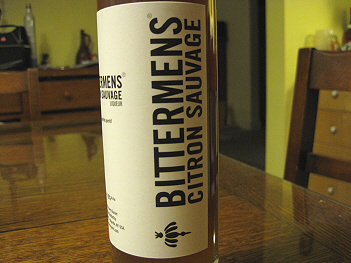
The newbie in my house now is Bittermens Citron Sauvage liqueur. I’ve long been a fan of the products from Avery & Janet Glasser – I was evangelizing about their bitters long before they were commercially available, and continue to be impressed by everything of theirs I’ve tasted – and, as someone who thinks the bitter complexity of grapefruit is one of the cocktail world’s less-explored avenues of wonder, I made sure Bittermens’ grapefruit liqueur made it into my order.

I’m only just starting to play around with it – save your sneering, East Coast barfolk, it takes a while to get these things out West – but here’s a simple little Red Hook-style riff that I’ve come back to a couple of times, with no complaints.

The Awkward Pause

  • 2 oz. reposado tequila
  • 3/4 oz. Punt e Mes
  • 1/2 oz. Bittermens Citron Sauvage liqueur
  • 2 dashes Bittermens Xocolatl Mole bitters

Combine ingredients in a mixing glass and fill with ice. Stir until chilled, about 30 seconds; strain into chilled cocktail glass. Twist a thin piece of orange peel over the drink for aromatics; use as garnish.

Tequila + grapefruit = obvious yum, the Punt e Mes bumps up the bitter quotient without being too pushy, and the bitters give hints of cinnamon and chile that seemed like a good idea at the time.

Given that the Red Hook is now long in the tooth, this isn’t the most original drink, but hey – simple variations often have a longer life span than do more daring ventures, so I’ll stick with it. And the name? If you’ve ever attempted to have a conversation with preternaturally shy me, it should make perfect sense.

Anyway, thumbs-up for the grapefruit liqueur – the only drawback is now I need to clear space in the crowded liquor cabinet for another keeper bottle.

Disappearing Act

Oh, so that’s where WordPress hid the “Publish” icon!

It’s been a long drought around here, for all the usual reasons — laziness, busy-ness, and some lingering technical snafus that took much longer than I’d hoped to be resolved — but I’ve been meaning to dust off the blog for a bit, and today seemed the perfect time.

You see, not only is today Mixology Monday, but it’s the first MxMo since I founded the event more than six years ago that I’m not moderating. This monthly cocktail party has brought a lot of boozy enjoyment over the years — to me, certainly, but also to the scores of people who’ve hosted and participated since the debut MxMo in April 2006 — but as with any ongoing event, you need some fresh blood to keep the whole thing from sagging into redundancy.

Feeling myself turning into the saggy sort when it came to keeping MxMo operational, I long considered either retiring the event — which struck me as somewhat selfish, so I shelved that idea for the time being — or handing it off to someone else, someone I trusted to keep the thing going without turning Mixology Monday into an embarrassment, and whose enthusiasm for good drinks would mean MxMo would give all its participants and readers a lingering buzz for years to come. So, starting this month, the whole Mixology Monday shebang is in the hands of Fred Yarm at Cocktail Virgin Slut, an experienced MxMo host who I’ve been fortunate enough to bend an elbow with in person, and who is basically booze-blogging personified.

Anyway, Fred is serving as both MxMo moderator and host this month, and he’s chosen for his inaugural theme: Equal Parts. Essentially, this means taking everything you’ve learned from proportionately equivalent drinks such as the Negroni and the Last Word — and by “everything,” I mean the premise that “1+1+1+1=awesome” — and deploy that understanding in the wild.

I’ve always had a thing for aperitifs, and as I wrote in the current issue of Imbibe magazine, American producers are increasingly making some delicious things to play with. My latest toy in the cocktail department is Imbue Petal & Thorn, a bitter aperitif that’s more like a vino amaro than a standard vermouth (or Imbue’s Bittersweet Vermouth). Delicate and herbal to the nose, the aperitif has a nice, lingering bitterness and a complexity that’s engaging enough to stand up to bold ingredients. Most of my trials with Petal & Thorn have been simple, martini or martinez-like combinations; this Negroni-esque drink is similarly simple, but has a crisp, earthy flavor that is anything but simplistic. Christened after my recent and temporary hiatus from the blog world, here’s the–

Disappearing Act

  • 1 oz. reposado tequila (I used Partida)
  • 1 oz. Imbue Petal & Thorn aperitif
  • 1 oz. sweet vermouth (I used Cocchi Vermouth di Turino)

Combine in a double old-fashioned glass and add ice; stir to chill. Garnish with grapefruit twist.

Somewhere between the agave snap, the spice in Petal & Thorn and the cola-esque sweetness of the vermouth, the Disappearing Act is almost chocolate-ey in its smoothness, with a light bitter bite in the finish that keeps the drink alert.

Now that I’ve rediscovered the “publish” icon, and apparently didn’t hurt myself too badly while typing this post, I may stick around in the blogosphere a while longer. But for now, head over to Fred’s site and see what everybody else was mixing for this Mixology Monday.

60/30, #37-39: the Negroni and friends

There are three drinks to get through in this post — one familiar classic that I’ve somehow never blogged about here, two not-so-familiar variations — so let’s dispense with the niceties and get right down to it.

The Negroni. A moment of silent veneration, if you please. Three ingredients, equal parts — easy to remember, easy to prepare. That each of these three ingredients seems to be custom crafted to be mixed with the other two makes this core classic all the more perfect, if you can enhance superlatives like that, which I’m not sure you can but what the hell, it’s my blog and I’ll do what I like.

While the Negroni is simplicity itself, it’s also flexible, and you can take the basic formula, as countless bartenders have, and tweak it in any number of directions. Here’s the original, to get started.

Negroni

  • 1 ounce dry gin
  • 1 ounce sweet vermouth
  • 1 ounce Campari

Combine in a mixing glass and stir well with ice until chilled, about 30 seconds. Strain into chilled cocktail glass or, if you prefer, into an ice-filled rocks glass. A wide swath of orange peel is a very good idea here; give it a twist over the drink and use as garnish.

A quick note before we move on: with such simplicity and balance, you need to pay attention to your ingredients. Campari is Campari, but everything else offers choices. For the gin, go as traditional as you can; Plymouth works well if you don’t want the juniper all up in your face, or go for old-school London drys like Tanqueray and Beefeater if you like that kind of confrontation. You can use a more contemporary gin if you like, but don’t get all frou-frou with lavender and rose petals and cucumbers and the like; for a Negroni, the gin’s gotta have some guts and gonads, and it can’t shy away from being GIN, so if you want something less in the Plymouth / London dry tradition, go for something savory and full-flavored like Martin Miller’s, Junipero or Voyager.

And the vermouth? Craft-cocktail types need to calm down a little when approaching this drink; sure, we all love Carpano Antica and it’s so much fun in Manhattan-esque drinks, but in a Negroni it’s just simply out of place (and while we’re on the topic of premium vermouths, Vya Sweet? Nice stuff, but keep it away from the Negroni for the same reason). Seriously, that’s not a Negroni — that’s a vanilla bomb, and at that point you’re hiding from the Campari (though there are exceptions, as I’ll get to in a minute). And Dolin Rouge is a favorite in some quarters, but in my opinion it’s just too light in character for this drink. You need a classic Turin-style vermouth (and “Antica” and history aside, the Antica formula flavor isn’t typical for a Turino vermouth), with sweetness and body but not too much; while Martini & Rossi takes some licks among the liquorati, I think it has the right combination of sugar / herbaceousness that a Negroni requires, and lately I’ve been using Martelletti, because it’s excellent vermouth and when I first found it I could only buy it by the case and I still have a shitload of it around. But really, Martini & Rossi is what you should reach for with a Negroni, and while you can argue with me all you want, I have the awesome palate of Neyah White on my side with this one, so there’s no way you can win this argument — though if you want to try, go read this first and then come back to fight.

Anyway, now that you have the basic, where to go next? Let’s stick close to home while still getting ambitious: the Negroni Swizzle. The recipe is from Giuseppe Gonzalez at Painkiller in New York; I’d heard about the drink for a while, then a few weeks ago I saw the recipe on Tasting Table. I finally mixed one last night and, hell: it has everything that’s fantastic about a Negroni, but somehow more approachable. If you have a friend who’s still a bit Campari-phobic but is willing to try, this is a great way to get them to warm up to a Negroni.

Negroni Swizzle
by Giuseppe Gonzalez, Painkiller, New York

  • 1 ounce dry gin
  • 1 ounce sweet vermouth
  • 1 ounce Campari
  • 1 ounce club soda
  • 1 pinch salt

Fill a Collins glass with crushed ice. Add the ingredients, and using a bar spoon between your palms, spin the spoon in the mixture to combine and chill. Add more crushed ice — really, pack the fucking glass until the ice is mounded and the liquid threatens to overflow — and garnish with an orange wheel or, if you’re like me and didn’t leave enough room, a long, broad strip of orange zest carefully inserted down the side of the glass. Straw, please — and let it sit for a minute, to get a good frost on the outside of the glass.

The ingredients and proportions are the same as the original, with one exception: a pinch of salt (use sea salt or kosher salt; none of that iodized crap for the table). You don’t want a big enough pinch for the drink to taste salty; rather, you want it to function like a pinch of salt in a bowl of soup, where it just points up the other flavors without making its presence known.

There’s some club soda in there, too, which I’m not counting as an ingredient change since you get dilution anyway when you stir a basic Negroni, but between this dilution and the powerful chill that accompanies a swizzle, the drink’s intensity of flavor is softened — it still has everything you’re looking for in terms of Negroni flavor, but it’s not as heavy on the palate and the strong flavors aren’t as much in your face.

One other mixing note, however: the whole swizzle technique is used a lot when you have really powerfully flavored ingredients (like demerara rum) and/or high-proof ingredients (ditto). It’s worth keeping this tradition in mind when mixing a Negroni swizzle; if you have a higher-proof gin like Martin Miller’s Westbourne or, better yet, Plymouth Navy Strength, then go for it.

Okay, back to the vermouth: for anybody with bruised feelings over my dismissal of Carpano Antica for this drink (seriously, I know I’m gonna get comments and maybe a snide e-mail or two), here’s an exception: swap out the base spirit, and the Carpano may have its place.

I first came across the Agavoni in Robert Hess’ The Essential Bartender’s Guide, and wrote about this for Serious Eats in early 2009; since then the drink has made the rounds, popping up in the Washington Post and in Jason Wilson’s excellent new book, Boozehound, among other places. Created by German bartender / Traveling Mixologist / drinks writer Bastian Heuser, the Agavoni swaps out the gin for a silver tequila, which gives the drink a bright, peppery spark, against which a more lush vermouth such as the Carpano Antica works well. When Jason Wilson wrote this up for the Post, he suggested blancos such as Siete Leguas or El Tesoro; I couldn’t agree more on those recommendations.

Agavoni
by Bastian Heuser

  • 3/4 ounce blanco tequila
  • 3/4 ounce sweet vermouth – Heuser recommends Carpano Antica
  • 3/4 ounce Campari
  • 2 dashes orange bitters
  • – grapefruit twist, for garnish

Build in a rocks or old-fashioned glass filled with ice. Stir briefly to mix and to chill; garnish with a grapefruit twist.

And if you’re into the whole Negroni variation thing, don’t forget the Boulevardier. Enough said.

60/30, #5 & 6: Epicurean and the Allies Cocktail

Alright, it’s the night before Thanksgiving, so I’m gonna make this quick (and I’m also going to take High Turkey Day off from the 60/30 project, then toss in two more drinks over the weekend to make up, just because I can).

About a year ago, as we were descending once again into the holiday season, I became enamored with brandy-based cocktails. I’d always been something of a fan of the brandy realm of mixology, and old-school Brandy Crustas and East India Cocktails satisfied me in ways that many other base spirits and cocktails just couldn’t. But brandy drinks can be clunky; as I mentioned in passing in a piece on California brandy I wrote for the San Francisco Chronicle last month, cognac and similar brandies have a real or implied sweetness about them; as a result, drinks made with these spirits take well to the drying qualities of citrus, but in spirit-forward drinks it’s quite easy to slip into the trap of making a cognac cocktail too cloying. There are alternatives, of course — Armagnac is usually earthier and drier, and has a good backbone as a cocktail ingredient, and then there are California brandies such as Germain-Robin, which I wrote about earlier this week — but for cognac-cocktail fans such as me, what other paths are there to follow?

Fortunately for me at the time, Murray Stenson at Zig Zag Café was already on top of that question. I was in the habit for a few weeks of having a very simple drink made with cognac, Root liqueur and bitters, which is way more of an alluring mixture than it has any right to be, but one night Murray asked if I’d like an Epicurean — a drink I couldn’t recall ever coming across.

Murray is largely a proponent of the David Embury school of mixing, and not surprisingly the Epicurean came from Embury’s The Fine Art of Mixing Drinks. I haven’t done a careful sort through the library, but a casual breeze through a few books and a few minutes of stray Googling didn’t turn up any other citations for this drink. Pity, that — I’ll admit the recipe doesn’t look that exciting on paper, simply a 2:1 mixture of brandy and dry vermouth, with a modifier of kummel liqueur and a dash of bitters. I could be just biased about this, but the mix of aged spirits and dry vermouth has rarely taken me anywhere I’d like to go again, and while I find the caraway/cumin flavor of kummel interesting in an academic kind of way, it’s rarely a flavor I find myself really jonesing for — unlike certain other spirits writers, who manage to work it into all kinds of things.

But somehow in this drink, the things I’d ordinarily think of as negative characteristics in dry vermouth and kummel in a brandy context — vermouth’s flattening powers with the light floral flourishes, so nice in gin drinks but distracting with aged spirits; and kummel’s sonorous savory notes, which seem to be dressed in out-of-fashion clothes and come across as stuffy and awkward next to the elegant delicacy of cognac — manage to cancel each other out, mostly, leaving a drink that still has the plushness of brandy but is streamlined, with little pops of spicy filigree out at the edges of the palate.

Anyway, the Epicurean: check it out.

Epicurean

  • 2 ounces cognac or other good brandy
  • 1 ounce dry vermouth
  • 1/2 ounce kummel
  • 1 dash Angostura bitters

Stir well with ice, strain into chilled glass. Embury doesn’t call for it, but a slender wisp of lemon zest emancipated from the fruit and sent, with a quick twist, into the depths of the drink, certainly isn’t a bad idea.

Of course, once I started thinking about dry vermouth and kummel, the immediately obvious drink to pop up on the radar is the Allies Cocktail. This drink appears in The Savoy Cocktail Book as 1:1 gin to vermouth, with a couple of dashes of kummel; I’ve seen it elsewhere as a 2:1 ratio with a couple of dashes (Embury) to a quarter-ounce (Gary Regan’s The Joy of Mixology) of kummel, essentially a wet martini with the spiced liqueur in place of orange bitters. And as to its name, story goes (which I can’t seem to find right now — help on a source for this, anyone?) that the ingredients — English gin, French vermouth, Russian kummel — represent the Triple Entente at the outbreak of World War I. Of course, the only kummel I’ve seen around lately is Gilka, from Germany, which kind of screws that whole thing up, so maybe best not to play up that story too much.

Anyway, the Allies has made the rounds of the cocktail guides and Internet searches way more than has the Epicurean. Which is one more example of a mediocre drink trumping a middling-to-good drink, for no discernable reason whatsoever. Not that the Allies is bad, not in any way — indeed, if you’ve got some kummel kicking around, whip out one of these (I vote with Embury on the tight-fistedness with the kummel); it has the lean brutality of a dry martini, with that little extra something that’s sometimes fun to have in the glass, like the brightness of orange bitters or the casual savagery of a little absinthe; the kummel adds a little archaic-yet-endearing Sally Bowles edge to the drink, which isn’t something you might want all the time, but when you want it, it works.

Allies Cocktail

  • 2 ounces London dry gin
  • 1 ounce dry vermouth
  • 2-3 dashes kummel, to taste

Ice, of course; stir, of course; strain – now you’re getting it. Garnish? Lemon zest, why not.

Art of the Aperitif

I love it when someone lectures me about vermouth.

It’s happened a couple of times recently; a few weeks ago, when a guy sitting at the bar at Zig Zag decided it was his duty as a cocktail geek to put this random stranger sitting next to him (me) on the path to good drinking by relating that so many people — myself included — are ignorant of how to properly store vermouth and too lazy to figure out the differences between the different styles; and more recently, in the comments on last week’s martini post over at Serious Eats.

When I say I love being lectured about this, I’m not being facetious (well, not entirely). While I’ve written about vermouth and aperitif wines a few times over the years, and prepared a presentation on vermouth for last year’s Tales of the Cocktail, I appreciate it when someone offers up stray bits of knowledge about a class of drinks that, just a few years ago, nobody really gave a shit about.

Well, random lecturing strangers, let’s make one thing absolutely clear: I give a shit about vermouth and aperitif wines — partially because they’re delicious, partially because they’re an absolutely essential component in the cocktail world, but mainly because, when you come right down to it, aperitif wines are just so fucking cool — and, whether you’re a drink geek zapping out cocktails at home, or a bartender who likes to actually know the ingredients you’re working with and how best to serve them, a basic understanding of vermouth and aperitif wine is as important as knowing the differences between bourbon and rye whiskey or which drinks should be shaken and which should be stirred.

A couple of weeks ago I wrote a piece for the San Francisco Chronicle about the class of aperitif wines known as quinquinas and chinati, which includes familiar brands such as Dubonnet and Lillet along with newer arrivals in the U.S. such as Bonal Gentiane-Quina and Cocchi Aperitivo Americano. To dig even deeper into the whole class of aperitif wines, liqueurs and cocktails, on July 24 I’ll be joined by Neyah the Great for our session, Art of the Aperitif, at Tales of the Cocktail in New Orleans.

Chances are, if you’re reading this blog (I’m assuming I still have readers after my recent shoddy blogging habits), you’re already familiar with the way a classic aperitif cocktail such as a Negroni can fire up the palate in preparation for a meal. But the world of aperitifs is wide, and especially today, with more aperitif wines and liqueurs coming onto the market, the time is ripe for really digging into the category. We’ll discuss some of the background of these different products, along with some classic ways of preparing and consuming them, but we also don’t want to get stuck in the mud of history — aperitifs are a living category of drinks, and they provide an exciting selection of flavors and character to introduce into new drinks, all designed to ramp up the appetite of your guests. We’ll be touching on some of the physical ways these types of drinks provoke the palate, and the way a good aperitif actually makes food taste better. And since these drinks are lower in alcohol, and are consumed at the start of a meal, good aperitifs can play a role in helping the business side of a bar or restaurant.

Anyway, those are a few things we’re planning on touching on during our session, along with pouring a couple of cocktails and tasting samples of aperitif wines including Noilly Prat Ambre vermouth and the new (to the U.S.) Martini Rosato vermouth. If you’re planning to find yourself in New Orleans next month, come check us out.

Art of the Aperitif: Exploring pre-prandial spirits, wines and cocktails
Saturday, July 24, 2010, 3:30 – 5:00 pm
Grand Ballroom South, The Royal Sonesta Hotel
300 Bourbon St., New Orleans
$40 (advance), $45 (door) – tickets may be purchased here

  • Liquor.com - Your expert guide to all things cocktails and spirits.
  • Archives

  • Subscribe via e-mail

    Enter your Email


    Preview | Powered by FeedBlitz
  • Categories

  • Support