
Entries Tagged as 'Tequila'

Awkward Pause

Some cocktails are like caresses — smooth and soothing, with delicate touches that deftly flick away all the assorted troubles of the day.

But sometimes, tenderness isn’t what’s needed. Sometimes, a little savagery is entirely appropriate.

Dark, bitter drinks have become almost a cliché in today’s cocktail world – and I say “almost,” because no matter how commonplace these cocktails may become in the sprawling suburbia of faux speakeasies, and no matter how fawning we behave over mixtures of rye whiskey, small-batch vermouth and amari so obscure they only exist in the bartender’s imagination, these brown, bitter and stirred drinks have one redeeming factor that will always keep them relevant: many of them, if not most, are just so fucking delicious.

I vacillate in my taste for these kinds of rough, boozy drinks. For months on end, I’ll venture little further into the realm than the occasional Manhattan or Boulevardier (I’m exempting the Negroni from this argument, with its base of gin, along with other, softer-though-still-bitter aperitifs, which I swill pretty much always), then something will grab my attention – the acquisition of a new amaro, a change in the seasons – and I’ll happily roll in the cocktail-geek muck again, if only for a little while.

The season’s gradually shifting here in Seattle, so that’s been impetus enough to dig the brown booze out of summer storage along with my sweaters and winter coat; and with the arrival of a recent box of goodies from an online booze outlet – Washington-state liquor prices having become obnoxiously high following our privatization debacle – I’ve found motivation enough to fall back into my old BBS (brown/bitter/stirred) habits.
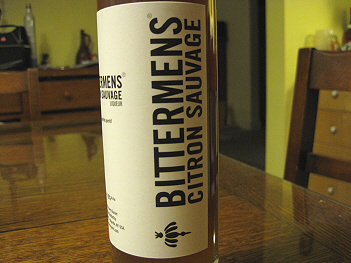
The newbie in my house now is Bittermens Citron Sauvage liqueur. I’ve long been a fan of the products from Avery & Janet Glasser – I was evangelizing about their bitters long before they were commercially available, and continue to be impressed by everything of theirs I’ve tasted – and, as someone who thinks the bitter complexity of grapefruit is one of the cocktail world’s less-explored avenues of wonder, I made sure Bittermens’ grapefruit liqueur made it into my order.

I’m only just starting to play around with it – save your sneering, East Coast barfolk, it takes a while to get these things out West – but here’s a simple little Red Hook-style riff that I’ve come back to a couple of times, with no complaints.

The Awkward Pause

  • 2 oz. reposado tequila
  • 3/4 oz. Punt e Mes
  • 1/2 oz. Bittermens Citron Sauvage liqueur
  • 2 dashes Bittermens Xocolatl Mole bitters

Combine ingredients in a mixing glass and fill with ice. Stir until chilled, about 30 seconds; strain into chilled cocktail glass. Twist a thin piece of orange peel over the drink for aromatics; use as garnish.

Tequila + grapefruit = obvious yum, the Punt e Mes bumps up the bitter quotient without being too pushy, and the bitters give hints of cinnamon and chile that seemed like a good idea at the time.

Given that the Red Hook is now long in the tooth, this isn’t the most original drink, but hey – simple variations often have a longer life span than do more daring ventures, so I’ll stick with it. And the name? If you’ve ever attempted to have a conversation with preternaturally shy me, it should make perfect sense.

Anyway, thumbs-up for the grapefruit liqueur – the only drawback is now I need to clear space in the crowded liquor cabinet for another keeper bottle.

Disappearing Act

Oh, so that’s where WordPress hid the “Publish” icon!

It’s been a long drought around here, for all the usual reasons — laziness, busy-ness, and some lingering technical snafus that took much longer than I’d hoped to be resolved — but I’ve been meaning to dust off the blog for a bit, and today seemed the perfect time.

You see, not only is today Mixology Monday, but it’s the first MxMo since I founded the event more than six years ago that I’m not moderating. This monthly cocktail party has brought a lot of boozy enjoyment over the years — to me, certainly, but also to the scores of people who’ve hosted and participated since the debut MxMo in April 2006 — but as with any ongoing event, you need some fresh blood to keep the whole thing from sagging into redundancy.

Feeling myself turning into the saggy sort when it came to keeping MxMo operational, I long considered either retiring the event — which struck me as somewhat selfish, so I shelved that idea for the time being — or handing it off to someone else, someone I trusted to keep the thing going without turning Mixology Monday into an embarrassment, and whose enthusiasm for good drinks would mean MxMo would give all its participants and readers a lingering buzz for years to come. So, starting this month, the whole Mixology Monday shebang is in the hands of Fred Yarm at Cocktail Virgin Slut, an experienced MxMo host who I’ve been fortunate enough to bend an elbow with in person, and who is basically booze-blogging personified.

Anyway, Fred is serving as both MxMo moderator and host this month, and he’s chosen for his inaugural theme: Equal Parts. Essentially, this means taking everything you’ve learned from proportionately equivalent drinks such as the Negroni and the Last Word — and by “everything,” I mean the premise that “1+1+1+1=awesome” — and deploy that understanding in the wild.

I’ve always had a thing for aperitifs, and as I wrote in the current issue of Imbibe magazine, American producers are increasingly making some delicious things to play with. My latest toy in the cocktail department is Imbue Petal & Thorn, a bitter aperitif that’s more like a vino amaro than a standard vermouth (or Imbue’s Bittersweet Vermouth). Delicate and herbal to the nose, the aperitif has a nice, lingering bitterness and a complexity that’s engaging enough to stand up to bold ingredients. Most of my trials with Petal & Thorn have been simple, martini or martinez-like combinations; this Negroni-esque drink is similarly simple, but has a crisp, earthy flavor that is anything but simplistic. Christened after my recent and temporary hiatus from the blog world, here’s the–

Disappearing Act

  • 1 oz. reposado tequila (I used Partida)
  • 1 oz. Imbue Petal & Thorn aperitif
  • 1 oz. sweet vermouth (I used Cocchi Vermouth di Turino)

Combine in a double old-fashioned glass and add ice; stir to chill. Garnish with grapefruit twist.

Somewhere between the agave snap, the spice in Petal & Thorn and the cola-esque sweetness of the vermouth, the Disappearing Act is almost chocolate-ey in its smoothness, with a light bitter bite in the finish that keeps the drink alert.

Now that I’ve rediscovered the “publish” icon, and apparently didn’t hurt myself too badly while typing this post, I may stick around in the blogosphere a while longer. But for now, head over to Fred’s site and see what everybody else was mixing for this Mixology Monday.

60/30, #37-39: the Negroni and friends

There are three drinks to get through in this post — one familiar classic that I’ve somehow never blogged about here, two not-so-familiar variations — so let’s dispense with the niceties and get right down to it.

The Negroni. A moment of silent veneration, if you please. Three ingredients, equal parts — easy to remember, easy to prepare. That each of these three ingredients seems to be custom crafted to be mixed with the other two makes this core classic all the more perfect, if you can enhance superlatives like that, which I’m not sure you can but what the hell, it’s my blog and I’ll do what I like.

While the Negroni is simplicity itself, it’s also flexible, and you can take the basic formula, as countless bartenders have, and tweak it in any number of directions. Here’s the original, to get started.

Negroni

  • 1 ounce dry gin
  • 1 ounce sweet vermouth
  • 1 ounce Campari

Combine in a mixing glass and stir well with ice until chilled, about 30 seconds. Strain into chilled cocktail glass or, if you prefer, into an ice-filled rocks glass. A wide swath of orange peel is a very good idea here; give it a twist over the drink and use as garnish.

A quick note before we move on: with such simplicity and balance, you need to pay attention to your ingredients. Campari is Campari, but everything else offers choices. For the gin, go as traditional as you can; Plymouth works well if you don’t want the juniper all up in your face, or go for old-school London drys like Tanqueray and Beefeater if you like that kind of confrontation. You can use a more contemporary gin if you like, but don’t get all frou-frou with lavender and rose petals and cucumbers and the like; for a Negroni, the gin’s gotta have some guts and gonads, and it can’t shy away from being GIN, so if you want something less in the Plymouth / London dry tradition, go for something savory and full-flavored like Martin Miller’s, Junipero or Voyager.

And the vermouth? Craft-cocktail types need to calm down a little when approaching this drink; sure, we all love Carpano Antica and it’s so much fun in Manhattan-esque drinks, but in a Negroni it’s just simply out of place (and while we’re on the topic of premium vermouths, Vya Sweet? Nice stuff, but keep it away from the Negroni for the same reason). Seriously, that’s not a Negroni — that’s a vanilla bomb, and at that point you’re hiding from the Campari (though there are exceptions, as I’ll get to in a minute). And Dolin Rouge is a favorite in some quarters, but in my opinion it’s just too light in character for this drink. You need a classic Turin-style vermouth (and “Antica” and history aside, the Antica formula flavor isn’t typical for a Turino vermouth), with sweetness and body but not too much; while Martini & Rossi takes some licks among the liquorati, I think it has the right combination of sugar / herbaceousness that a Negroni requires, and lately I’ve been using Martelletti, because it’s excellent vermouth and when I first found it I could only buy it by the case and I still have a shitload of it around. But really, Martini & Rossi is what you should reach for with a Negroni, and while you can argue with me all you want, I have the awesome palate of Neyah White on my side with this one, so there’s no way you can win this argument — though if you want to try, go read this first and then come back to fight.

Anyway, now that you have the basic, where to go next? Let’s stick close to home while still getting ambitious: the Negroni Swizzle. The recipe is from Giuseppe Gonzalez at Painkiller in New York; I’d heard about the drink for a while, then a few weeks ago I saw the recipe on Tasting Table. I finally mixed one last night and, hell: it has everything that’s fantastic about a Negroni, but somehow more approachable. If you have a friend who’s still a bit Campari-phobic but is willing to try, this is a great way to get them to warm up to a Negroni.

Negroni Swizzle
by Giuseppe Gonzalez, Painkiller, New York

  • 1 ounce dry gin
  • 1 ounce sweet vermouth
  • 1 ounce Campari
  • 1 ounce club soda
  • 1 pinch salt

Fill a Collins glass with crushed ice. Add the ingredients, and using a bar spoon between your palms, spin the spoon in the mixture to combine and chill. Add more crushed ice — really, pack the fucking glass until the ice is mounded and the liquid threatens to overflow — and garnish with an orange wheel or, if you’re like me and didn’t leave enough room, a long, broad strip of orange zest carefully inserted down the side of the glass. Straw, please — and let it sit for a minute, to get a good frost on the outside of the glass.

The ingredients and proportions are the same as the original, with one exception: a pinch of salt (use sea salt or kosher salt; none of that iodized crap for the table). You don’t want a big enough pinch for the drink to taste salty; rather, you want it to function like a pinch of salt in a bowl of soup, where it just points up the other flavors without making its presence known.

There’s some club soda in there, too, which I’m not counting as an ingredient change since you get dilution anyway when you stir a basic Negroni, but between this dilution and the powerful chill that accompanies a swizzle, the drink’s intensity of flavor is softened — it still has everything you’re looking for in terms of Negroni flavor, but it’s not as heavy on the palate and the strong flavors aren’t as much in your face.

One other mixing note, however: the whole swizzle technique is used a lot when you have really powerfully flavored ingredients (like demerara rum) and/or high-proof ingredients (ditto). It’s worth keeping this tradition in mind when mixing a Negroni swizzle; if you have a higher-proof gin like Martin Miller’s Westbourne or, better yet, Plymouth Navy Strength, then go for it.

Okay, back to the vermouth: for anybody with bruised feelings over my dismissal of Carpano Antica for this drink (seriously, I know I’m gonna get comments and maybe a snide e-mail or two), here’s an exception: swap out the base spirit, and the Carpano may have its place.

I first came across the Agavoni in Robert Hess’ The Essential Bartender’s Guide, and wrote about this for Serious Eats in early 2009; since then the drink has made the rounds, popping up in the Washington Post and in Jason Wilson’s excellent new book, Boozehound, among other places. Created by German bartender / Traveling Mixologist / drinks writer Bastian Heuser, the Agavoni swaps out the gin for a silver tequila, which gives the drink a bright, peppery spark, against which a more lush vermouth such as the Carpano Antica works well. When Jason Wilson wrote this up for the Post, he suggested blancos such as Siete Leguas or El Tesoro; I couldn’t agree more on those recommendations.

Agavoni
by Bastian Heuser

  • 3/4 ounce blanco tequila
  • 3/4 ounce sweet vermouth – Heuser recommends Carpano Antica
  • 3/4 ounce Campari
  • 2 dashes orange bitters
  • – grapefruit twist, for garnish

Build in a rocks or old-fashioned glass filled with ice. Stir briefly to mix and to chill; garnish with a grapefruit twist.

And if you’re into the whole Negroni variation thing, don’t forget the Boulevardier. Enough said.

60/30, #9, 10 & 11 – Mezcal makes the rounds

A little over five years ago, when I first started this blog, mezcal hadn’t even risen high enough in the cocktail world to be considered an afterthought. Sure, Ron Cooper had begun importing his Del Maguey single-village mezcals back in the ‘90s, but these things take time, and while tequila was in full bloom following the turn of the century, mezcal took its time to step into the cocktail-geek spotlight.

I’m running late in getting this post up, so I’ll keep it short; I’m also a couple of drinks behind on this 60/30 thing due to taking the day off for Thanksgiving, so I’ll toss in a third drink (plus, a bonus / screwup drink that’s still kinda tasty) to help move things along.

For the handful of people out there who still haven’t ventured to the artisanal mezcal well, mezcal in many ways tastes like tequila without makeup. While a blanco tequila can have flavors of peppers, slate and wildflowers, all on top of a gentle, juicy agave sweetness, mezcal is just kind of more everything – more dark spices, more jammy richness of cooked pears and baked apples, more earthy minerality, more firey, more smoky, more primal, more visceral, more grrrrr…. A single mezcal can have most, or all, or none of these characteristics, venturing out into its own part of the spirituous universe where nothing at all tastes quite the way it does.

Given its potency of flavor, not to mention its cost, perhaps the best way to slip into mezcal mixology is to use it as an accent ingredient, where its rich smoky everything can play off the other flavors in the glass without taking over the show. Here’s a drink that uses mezcal as an accent to very good effect: the Red Ant.

I wrote this up for the September/October 2010 issue of Imbibe, as part of a feature on cocktail bitters. The Red Ant was created by Thomas Waugh, then a bartender at The Alembic in San Francisco but now at Death & Co. in New York. The drink is named for the Rio Hormiga Colorada, or Red Ant River, in Oaxaca, and uses a mere barspoon Del Maguey Chichicapa in a mix that includes big, vibrant flavors from Rittenhouse 100-proof rye whiskey, Cherry Heering and kirschwasser. The mezcal hangs over the drink like a plume of smoke from a wood stove, and the combination of mezcal and kirschwasser — which brings its own ethereal drama to the mix in a big way — is really quite enchanting.

Red Ant
From Thomas Waugh, Death & Co., NYC

  • 1 1/2 oz. rye whiskey (Rittenhouse bonded; failing that, Wild Turkey 101)
  • 1/2 oz. kirschwasser
  • 1/2 oz. Cherry Heering
  • 1 barspoon mezcal (Chichicapa if you got it)
  • 2 dashes Bittermens Xocolatl Mole bitters
  • –3 cherries skewered on a pick, as garnish. Sneer all you like, but it looks like an ant; besides, I’m still kind of a sucker for Toschi Amarena

Stir well with ice & strain into chilled coupe. Stick that cherry ant in there and shut up for a while about the damn cherries.

Excellent, excellent drink — but there’s an accidental variation on this drink that I also like quite a bit. See, I first heard about this drink from Avery Glasser, who with his wife Janet is the mastermind behind Bittermens Bitters. Somewhere in talking about this drink with Avery, there was a mixup in the ingredients, and for a couple of weeks I was sampling this lovely drink using the wrong recipe. Thomas Waugh set me right, and the recipe above is the correct version; but, the “mistake” version also kinda rocked, so I’ll pass that along as well. Keep in mind that this alternate doesn’t include mezcal, so the whole “Red Ant” idea is out the window, as is the rationale for including this drink in a mezcal post, but hey, it’s just liquor.

Mistaken Ant

–same recipe as above, except substitute 1 barspoon cinnamon syrup for the mezcal; Trader Tiki Cinnamon Syrup is quite nice here

Sure, you lack the smoke and a little bit of the complexity, but cinnamon, Cherry Heering and kirschwasser, with some mole bitters in the mix? There’s nothing wrong at all with that mistake.

Anyway, the next step in mezcal mixing is often to bump up the mezcal to a full ounce or so, matching it step for step with the mediating effects of tequila. Julian Cox at Rivera in Los Angeles passed along this recipe for his Poblano Escobar, which ran last summer in Imbibe. Julian mixes the drink with mezcal or with blanco tequila; I’ve made these a few times at home, to try out each variation, and for the most recent round I used equal parts Cabo Wabo blanco (it had been sent as a sample and isn’t half bad, so I thought I’d give it a spin in this drink) and Del Maguey Mezcal Vida (not a sample, bought with my own damn cash, and at about $34 a bottle, much more affordable than the rest of the Del Maguey line).

I’ve also been guilty in the past of being dismissive of muddled ingredients, a position I still hold on a certain level because it’s so overdone, and so badly in many places, that I wish it’d be approached more seriously, but I’ve also sampled some fantastic drinks made with the “garden fresh” approach, so I’d now like to extend a cautious and respectful gesture of welcome to the muddlers of the world. In this drink, poblano peppers and pineapple are both crushed into the mix; hey, it works.

Poblano Escobar
From Julian Cox, Rivera, Los Angeles

  • 2 oz. blanco tequila or mezcal, or some combination thereof
  • 3/4 oz. Royal Combier (Julian’s call; I like it, but if you don’t have it you can sub Cointreau)
  • 1 oz. fresh lime juice
  • 1/2 tsp. agave nectar
  • 4 chunks fresh pineapple
  • 2 or 3 1/4-inch-think rings of sliced poblano chiles, seeds removed
  • 1/4 tsp. ground cumin

Muddle chiles in a cocktail shaker with lime juice and liqueur. Add pineapple, cumin and agave nectar and muddle again. Add tequila and/or mescal and load up on ice; shake well and double-strain into chilled rocks glass filled with a large cube of ice. Garnish with slices of poblano pepper and orange.

Of course, no discussion of mezcal cocktails is complete without mentioning Phil Ward at Mayahuel in NYC. I’ve written up a bunch of Phil’s drinks in the past, both online and in print, and he’s always one of my favorite bartenders to interview (though, I’m ashamed to say I still haven’t had the chance to sit across the bar from him). I have another of Phil’s drinks coming up later on, but a couple of weeks ago a Mayahuel drink called Jacko’s End (created, apparently, on the day MJ performed that moonwalk into the great beyond) was listed on Tasting Table’s list of “The Year’s Best Cocktails” for NYC. In this one, mezcal is matched against an equal measure of Laird’s bonded apple brandy — a combo I could automatically taste in my mind, with that rich body of smoky mezcal up against the sharp bite of apple brandy — fleshed out with a little Benedictine and a couple of dashes of bitters. Simple, basic, classically designed and with premium ingredients: that’s all I needed to know.

Jacko’s End
From Mayahuel, NYC

  • 1 ounce mezcal (I used Vida, for the reasons stated above)
  • 1 ounce Laird’s 100-proof apple brandy
  • 1/2 ounce Benedictine
  • 2 dashes Peychaud’s bitters
  • –pear slice, for garnish

You know the drill – ice, stir, strain into chilled glass, garnish. Like I said, simple.

Between the Benedictine and the mezcal, there’s a silky, honeyed texture to this drink. The sharpness of the Laird’s bonded and the peppery serrations in the mezcal combine in a really pleasant assertiveness in the drink, followed by the ghostly herbaceousness of mezcal-meets-Benedictine, finishing with that little wisp of smoke. This one’s going into the regular rotation.

30/30, #27: the Prado

No history behind this one that I know of, other than that it appears in Jones’ Complete Bar Guide by Stan Jones — go ahead, check out the link — from 1977, and that it’s been in regular circulation at Zig Zag for god knows how long (and that Anita clued in to the wonders of this drink way back in ought-seven). What I do know is:

  • It’s a really novel twist on the old tequila – lime juice combo;
  • maraschino and tequila interact in a really deep and almost viscerally appealing way in the glass;
  • it’s ripe for further exploration.

I only get the hankering for these once in a great while, but every time I mix one, I wonder why I don’t do so more often. I usually use a reposado in these, though a blanco is good when you’re looking for a bit more spark. I can also imagine doing something jazzy with this drink along the lines of a bitters splash atop the egg white foam, or maybe a mescal rinse — not that it needs it, though I doubt it would be offended by an accessory or two.

Prado

  • 1 1/2 ounces tequila (blanco or reposado – your call)
  • 3/4 ounce fresh lime juice
  • 1/2 ounce maraschino liqueur
  • 1/2 egg white (or toss the whole one in and mix two drinks)

Shake like hell without ice — maybe with a strainer coil in the shaker to help mix things up — then fill with ice and go at it again for 10 seconds or so. Strain into a chilled cocktail glass.

This drink is part of 30/30, a series of 30 drinks in 30 days — or as much as I can keep up before collapsing in a weary, booze-addled heap.

  • Liquor.com - Your expert guide to all things cocktails and spirits.
  • Archives

  • Subscribe via e-mail

    Enter your Email


    Preview | Powered by FeedBlitz
  • Categories

  • Support