
Entries Tagged as 'Scotch'

A look back at whisk(e)y season, Part II

Yesterday, I launched into a wandering and long-overdue meditation on the whiskies that, for me, made the long, grisly winter of ’12-’13 endurable. Yesterday’s post covered bourbon; today, it’s all about the Scots and the Irish.

When looking back on brown-booze season, it wasn’t all a bourbony blur around here. These are a few approachable, available and affordable whiskies that helped me span the gap between October and April.
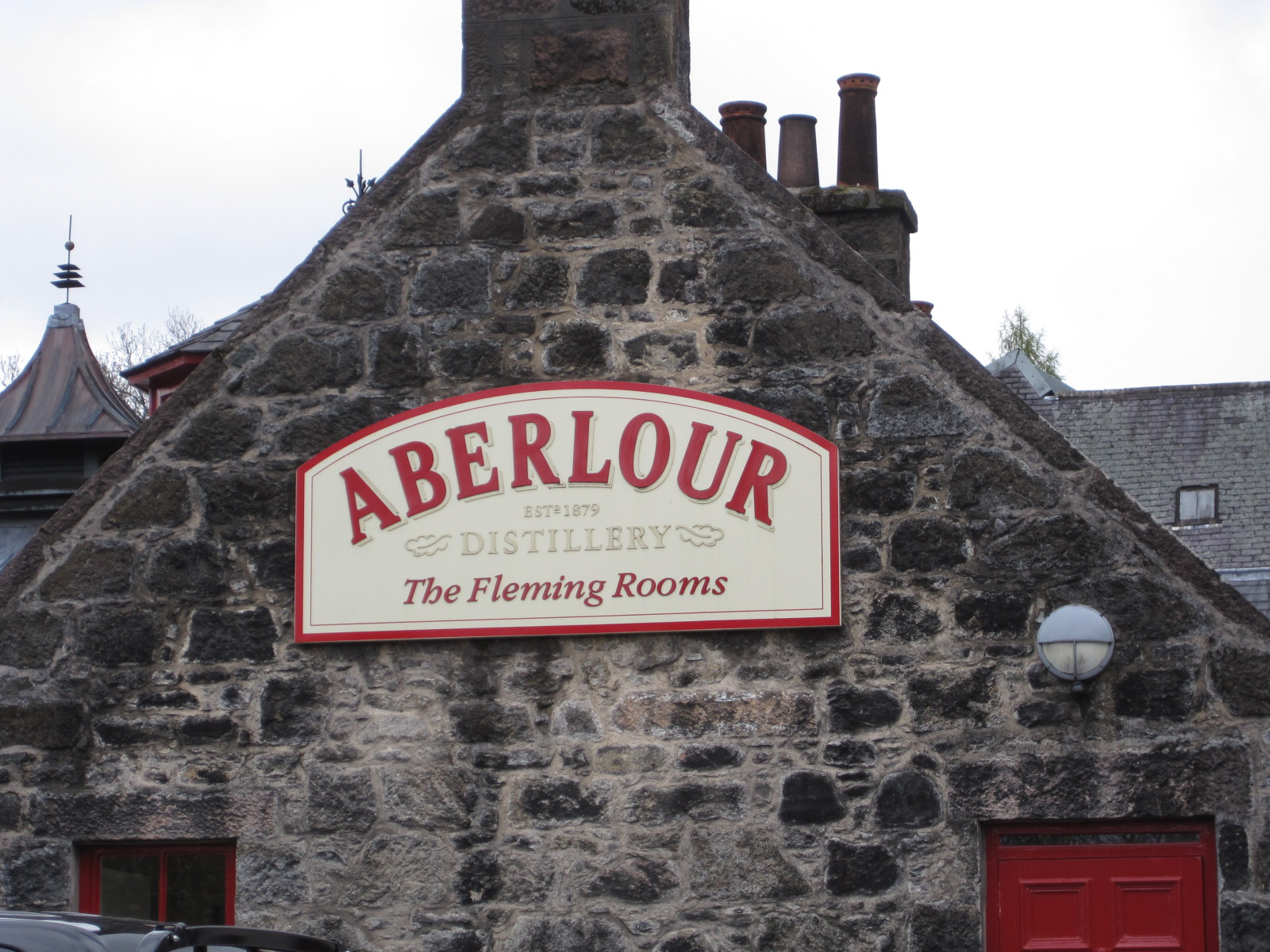
* Aberlour A’Bunadh –  I was pitifully ignorant of Aberlour before 2012, but the happy coincidence of a visit to Seattle by Aberlour brand ambassador Ann Miller, and a visit of my own to the distillery last spring, made me a fan of this whisky.

The 10 year is a perfectly agreeable Speyside malt, a mix of whiskies matured in bourbon casks and olorosso butts (the same goes for its older kin), but A’bunadh is where Aberlour really shines: cask-strength, un-chill-filtered and entirely sherry aged, the whisky is silky and rich, with touches of chocolate and cherries and honey and all those reassuring flavors that remind you that, even in the depth of a blustery winter, liquid compassion can still be found.

* Dalmore 18 – A few years ago, I spent a day driving across the Scottish Highlands in a van with Richard Paterson, the master blender for Whyte & Mackay who deserves much of the credit for this whisky’s nonstop deliciousness. We drove from Edinburgh to the Dalmore distillery, blurry and beaten (at least I was) from a long night of oversampling the Dalmore Mackenzie expression. At the Dalmore, we tasted a handful of whiskies (including a particularly rare one that Richard dispensed by the dropper), poked around in the barrel warehouses, then skedaddled back to Glasgow before nightfall.

My head still faintly aches from that first, long night, but what I recall from the journey — and the reason the Dalmore 18 has earned a spot in my regular winter rotation — is the whisky’s oily lushness, its balance of coarse earthiness and bold fruit. All of the expressions of the Dalmore have this to some extent, but the 18 walks a particularly fine line between the soft nature of wildflowers and honey that you find in so many Highland malts, and the blustery ruggedness that’s bold enough to bolster you through the worst winter days, while retaining enough freshness of spirit to remind you of better times to come.

Bourbon is for shaking off the chill and settling into the comforting warmth indoors; malts like the Dalmore 18 help you pull the coat more tightly around your shoulders, and tell the wind and rain that they can just fuck off for today.

* Pretty much anything from Highland Park – Highland Park is the most Game of Thrones of whiskies.

Think about it: They’re making whisky at the northernmost distillery in Scotland, so they’d better know a thing or two about dark and cold and how to keep them at bay. Highland Park’s answer is to lace the spirit with just a mild lashing of smoke — not enough to make the whisky a brawling brute like the peaty bastards from Islay (though there’s plenty of room for those in winter, of course) — but enough to blow a little air on the embers of a drinker’s insides, a bold (but not too much) shove back against winter that can fan the flames in mind and body while soothing the season’s restlessness with honey, and grass, and toasted nuts and fruits.

My mainstay this past winter was the basic HP12. Why the 12 year? Because it’s what I have, and it works, and I can afford it. Go for the higher range if your inclination and your wallet allow — there is no disappointment to be found here.

* Redbreast 15 year – Because when St. Patrick’s Day rolls around, green beer is for suckers.

Redbreast has a lightness of character like the rest of its Irish brethren, but it also knows how to land a punch, its gentle flavors of honey and grass matched with a robust oiliness. Redbreast 15 year is as comforting as having breakfast with your grandmother, but as serious as having breakfast with the grandmother who can kill a mouse by flinging her shoe across the room at it without taking her eyes off the story she’s reading to the kids.*

(* actual example from my actual grandmother, who to the best of my knowledge never drank a drop of Irish whiskey.)

A drink at Vito’s in Seattle, and a correction–

Over the past few years at Imbibe, I’ve had the chance to write about the cocktail situation in Las Vegas and San Francisco, Los Angeles and Vancouver. But it wasn’t until the current issue (which appeared in mailboxes last month — hey, I’ve been busy) that I finally had the opportunity, or the excuse, to officially roll through many of the craft-cocktail bars in my own hometown of Seattle. (The November/December issue is still available on the shelf, or if you need to read the Seattle piece RIGHT NOW, here’s a link to a PDF copy – but really, get the magazine).

One of the drawbacks of these kinds of stories is that I never have enough space to fully recognize some of the more noteworthy bars and the talented bartenders that I come across. In the print version of the story, I included recipes from Erik Hakkinen at Zig Zag Café, Eric Carlson at Moshi Moshi, and Jay Kuehner at Sambar, but these are only a few of the bartenders who have made Seattle into the city it is today: a soggy, Ramazzotti-soaked destination for the cocktail enthusiast and/or the discerning inebriate.

But whaddaya know — I have a blog, a little rusty from recent disuse but as far as I can tell, still functional (knock wood). So over the next week or so — emphasis on the “or so” — I’m going to run a few notes and recipes from bars and bartenders I may have mentioned in the article, but didn’t have a chance to fully recognize.

First on this mini-tour of Seattle bars is a place that I first visited not long after I moved to Seattle in 1998: Vito’s, on First Hill. Vito’s has been around since the 1950s, and the décor seems to hardly have changed since its debut (don’t believe me? Check out the Cougar Room in the back). In the late ‘90s, Vito’s was a fun if slightly down-at-heel kind of place to spend a Saturday night; more recently, the bar had a run of bad luck, and the memories it inspired started trending to the “I almost got shot there” variety.

But last year, new owners started cleaning the place up, keeping the non-ironic retro furniture and the edge-of-downtown aura to the place, but spiffing up the menu and the music and just generally getting Vito’s vibe and clientele back into more-or-less respectable territory. Even better — at least from a cocktail-geek’s perspective — the bar’s booze selection was seriously rethought. Sure, you can still get a can of Oly and a shot of well whiskey at the bar, but Vito’s is reflecting its Italian influence with more than just the eggplant parm; bottles of Italian aperitifs, spirits and liqueurs such as Zucca Rubarbaro, Strega and Barolo Chinato now populate the back bar, and the bar menu has a serious drink-geek’s touch, with cocktails such as the Waldorf & Statler, made with gin, falernum and Fernet Branca; the Akimbo, a rye, Campari and Barolo Chinato drink not on the current menu but worthy of a return engagement; and the Tom Handy, a Sazerac interpretation made with Rittenhouse rye and Remy VSOP, spiced with The Bitter Truth Creole Bitters. The drinks take an East Coast, spirit-forward approach, and this winter Vito’s is even serving Smith & Cross-fuelled Tom & Jerrys, the first regular appearance of these I’ve seen in a Seattle bar.

Still, Vito’s is not immune from misfortune, as is demonstrated by my Imbibe story:  while I recognized bartenders Jared Scarr and Nabil Sherief for their work behind the bar, somewhere in my fuzzy joy at finding that Vito’s had cleaned up and had taken the craft-cocktail pledge, I accidentally gave Jared a promotion to bar manager, overlooking the man who’s done the most to turn Vito’s beverage program around: Justin Gerardy.­­ So here, in front of the Internet and everybody, I offer my apologies to Justin, and as testament to the skill of Vito’s bar staff, I offer you one of the establishment’s original drinks (developed by barman Connor O’Brien and named by Gerardy), To Hell With Spain.

To Hell With Spain

  • 2 oz. blended scotch (Gerardy uses the smoke-laden Johnny Walker Double Black, which you should as well — failing that, the peat-enhanced Black Grouse should work)
  • 1/2 oz. Carpano Antica vermouth
  • 1/4 oz. Laphroaig 10-year-old
  • 1/4 oz. Cherry Heering
  • 3 dashes absinthe (Pacifique – yesss…)

Combine ingredients in a mixing glass and fill with ice. Stir well until chilled, about 30 seconds. Strain into chilled cocktail glass; garnish with a cherry.

“Remember the Maine, To Hell with Spain” — get the connection? This is the Remember the Maine’s smoky Scottish cousin, with the peaty complexity supplied both by the new-ish Johnny Walker Double Black, which carries an extra payload of Islay malt in its blend; and by a touch of Laphroaig, just to keep the fire burning. Cherry Heering, Carpano and absinthe are burly enough characters to take a little smoke in stride, and the result is a powerfully flavored, richly alluring cocktail.

As Gerardy says, “I tend to be most interested in a drink that references its ingredients, rather than tries to redefine those flavors. When you do that, some of the reverence for that is lost.” No worries of anything getting lost in this mix – it’s one I’ll come back to, especially as the season gets darker and colder.


Strong Medicine

It’s not even three weeks into the new year, and here I am already breaking my “don’t blog” resolution by finally putting up a drink post (that Jan. 1st thing was more an announcement, so don’t bug me with the details). What’s prompted me to break my long blogging drought? Mixology Monday, what else, this round hosted by A Mixed Dram, and focusing on “New Horizons” — in short, mixing with stuff you don’t usually use.

I’m perhaps more prone to habit than most, and as a result my liquor closet is literally overflowing with the predictables — rum, rye, gin, assorted liqueurs — and rather slim on spirits I rarely use, such as vodka, pisco and cachaca (though the good folks who market Leblon, Boca Loca, Cabana and probably someone else I’m forgetting have made sure I have plenty around should the mood hit). Shamefully, one of the spirits that rarely makes its way into my mixing glass is scotch whiskey. I suppose I have some excuse — as agreeable as scotch can be on its own, it has a predisposition to surliness when forced to room with other ingredients — but still, for a spirit that has such a wide flavor profile and so many appealing characteristics, it’s one I rarely use (not that I dislike it in a cocktail, though — drinks such as the Blood & Sand or the Cameron’s Kick are in my permanent repertoire).

Here’s a relevant cocktail that I’ve had scribbled in my notebook for a while, but until tonight have yet to put together: the Penicillin Cocktail. Created by Sam Ross of Milk & Honey in New York, the Penicillin is not only made with a base of blended scotch — which tends to have a gentle, mellow flavor that typically makes it more versatile as a cocktail ingredient than single malts — but it’s served with a float of Islay scotch, a style of the spirit so bristlingly potent in aroma and flavor that it takes the blend’s twin descriptors of “gentle” and “mellow” and smashes their little heads together in its burly grasp. Easing the meeting of the two is a good dose of ginger-honey syrup, along with a bit of lemon, which helps everything balance out.

Penicillin Cocktail

  • 2 ounces blended scotch (I used Famous Grouse)
  • 3/4 ounce fresh lemon juice
  • 3/4 ounce ginger-honey syrup
  • 1/4 ounce Islay scotch (I used Laphroaig)

Combine blended scotch, lemon juice and syrup in a shaker, fill with ice and shake well. Strain into an ice-filled rocks glass and float Islay scotch on top.

For ginger-honey syrup (my recipe; chime in if you use something different): combine 1/2 cup honey and 1/2 cup water in a saucepan over medium heat and whisk until well combined. Add an ounce or so of peeled, sliced fresh ginger and bring to boil; reduce heat and simmer for 10 minutes. Allow to cool completely; strain.

Wow — between the ginger and the lemon, the whisky’s assertive tendencies are kept well in check. Not that they’re suppressed — Laphroaig’s trademark smokiness fills the glass, but the drink is balanced, enticing and, dare I say it, gentle.

That’s my mix for this round of Mixology Monday; head on over to A Mixed Dram to see the roundup of all participants’ posts.

Whiskey by the Bay

Sorry for the long delay there — I think I’m still in shock from the experience of seeing so many different types of whiskey trotted out at WhiskyFest in San Francisco last Tuesday; that, and from my experience at Bourbon & Branch the night before.

While my liver and I still aren’t on speaking terms, I can say that I had a great trip. I got into town on Monday, just in time to check in at the hotel then head over to Absinthe to meet the evening’s companions, Anita & Cameron from Married…With Dinner, and Erik Ellestad and his lovely wife, Michele (a surprise to Erik, it being his birthday). Our experience at Absinthe was short, it being closed and all (happy Monday!), but we trundled over to the Orbit Room for cocktails that fell into the the “not bad, but we’ll just have one and then move on” category.

After Erik and Michelle headed off for his birthday dinner, Anita and Cameron let me tag along as we headed up the hill to NoPa. I’d read about this restaurant somewhere, and heard only glowing details, but somehow I’d missed any mention of its cocktail list (not surprising — so many reviewers turn a blind eye to that whole side of the business). That was a mistake — they had some really great sounding drinks on the menu, many with house-made bitters. Anita had a Girasol, made with fino sherry, St. Germain and sunshine bitters (made with cardamom and saffron), Cameron went for an Old Cuban and I had an Amarita, made with blanco tequila, Aperol, lime juice and house-made grapefruit bitters (the bartender said there was some sage in the bitters, and I had no complaints). They were fantastic all around.

I’d tell you about the dinner, except since I was dining with two very accomplished food bloggers, I’d probably embarass myself — though I probably couldn’t embarass myself any more than I did by hovering over my pear salad and Mediterranean fish stew, looking territorial and making growly yummy sounds as I stuffed myself with scallops and squid, oblivious to all rules of social discourse.

My manners couldn’t have been too obnoxious, though, because Anita & Cameron gave me a lift back downtown, dropping me in the middle of the Tenderloin and pointing at the unmarked door for Bourbon & Branch. This is a bar I’d heard and read about extensively since they opened, and during my short time in San Francisco it was at the top of my list of places I needed to try. Fortunately, this being a Monday, the bar was fairly quiet, and I had no problem getting a seat at the bar (the reservation I’d made earlier in the day seemed unnecessary, though on a busier night I can see how they’d be required).

And this visit to Bourbon & Branch was both my pinnacle and my defeat. Pinnacle, because I had the pleasure of being treated like a king by Joel and Eric, the gentlemen working the bar that evening. After an introductory drink I put myself in their hands, and I was really blown away. House cocktails like the Black Manhattan — made with Buffalo Trace bourbon, Averna and Fee’s Barrel-Aged bitters — were really astounding. Eric mixed another drink using Michter’s rye, Luxardo maraschino and some black liquid from a mystery bottle, then told me it was something made with Belvedere vodka in which had been macerated whole walnuts (green and black, I believe — my notes are a little sketchy), and herbs including mint and rosemary.

And defeat? It was my defeat, simply, because I was so overwhelmed by the quality of the drinks they were serving and their commitment to their craft, that by the time I stopped to think “wait — how much have I had?” the answer was “definitely enough.” Fortunately I was sitting next to a couple of guys who were also in town for WhiskyFest and who were similarly in the bag, and together we pointed ourselves in the right direction for our hotels (except for the guy we lost somewhere — but his buddy wasn’t concerned, so neither was I). I shrugged off the offer to hang out and drink tequila — probably the best decision I’ve made in a long time — then made it back to the hotel to crash and then wake up with a headful of thunder and fuzzy memories (thank god for the notebook).

Rye list at AlembicAfter I managed to slough off most of my hangover — foraging a lunch at the Ferry Building Marketplace helped — and take care of a little work, I headed up to Haight St. to meet Erik and Jimmy Patrick at Alembic. This was another bar I’d been hoping to try, and while I was saving myself for WhiskyFest — and was still a bit tender from the night before — I had a fantastic La Paloma, with house-made grapefruit soda, while Erik and Jimmy went for Sazeracs. I nearly broke down in tears when I saw the list of ryes on their spirits board, and I felt really at home in Alembic’s comfortable space.

Jimmy Patrick & Erik EllestadWhile the drinks were tasty, the highlight for me was getting to hang out with Erik and Jimmy, who’s a dedicated whiskey fan, even if he does prefer the delicate peaty stuff to the awesome vitality of an honest-to-god American spirit. Still, one more scotch drinker meant more bourbon for me, so after settling up Jimmy and I grabbed a cab downtown for the main event.

I had planned on playing it really cool and easy, taking a walk around the room and scoping out the selection before diving in. I made it as far as the Van Winkle table before scrapping that plan. Both Preston and Julian were in attendance, and since I’d spoken with Preston by phone before, I thought I’d stop and introduce myself (and grab a taste of some 20-year-old Pappy along the way). Van Winkle has always had everything I love in bourbons — a rich, buttery base with a nice, soft body and a finish that lasts for weeks.

I could have spent five minutes just nosing the whiskey before moving on, and would have, if I hadn’t noticed that right next to Van Winkle was the table for Buffalo Trace. In various places on this site I’ve been known to wax rhapsodic about the wonders of Weller and the virtues of the Sazerac line of ryes. Buffalo Trace had their top of the line out for WhiskyFest, which of course meant the 2007 Antique Collection, and were pouring tastings before the bottles even hit the shelves. My impulse was to go directly for the Stagg — at 144 proof, the bulldozer of bourbons — but instead I started gentle, with a taste of the Sazerac 18-year-old rye. Christ – I love all the Sazerac ryes (the Thomas Handy is one of my top 3 ryes, ever), but the 18-year-old is really a centerpiece of the Antique Collection, and it’s easy to see why. Dry, oaky, almost musty in its austerity, the rye has a beautifully crisp flavor that really primes the palate. It was hard to tear myself away from the Sazerac, but for the sake of the Stagg, I managed it, and JESUS! was that a big bunch of whiskey in the glass. At 144 proof, this bourbon is afraid of nothing, and it had this amazing aroma of pipe tobacco that made you just want to settle down with a glass and spend some time getting acquainted. This is probably gonna be my Christmas present to myself this year, assuming I can find a bottle.

After Van Winkle, Sazerac and Stagg, it could have all gone downhill, but there were so many fantastic whiskies being poured that it was easy to just roam and talk and taste. I estimate I tasted around 35-40 whiskies during the evening, ranging from Stranahan’s Colorado whiskey to 40 Creek Canadian whiskey (which I’d previously enjoyed at Tales of the Cocktail) to Jura single malt (a “highland from an island,” poured by Willie Tait), to a trio of Mackillop’s Choice Single Cask whiskies (poured by Lorne Mackillop himself — thanks to Jimmy for making the introduction), and another trio of Old Pulteney.

But while I stepped around the map a bit, American whiskies are where my main interest lies, and I had some really fantastic stuff that I’ll likely never see again. From tasting Woodford Reserve’s four-grain and Sonoma-Cutrer Finish whiskies (the latter finished in used chardonnay casks, which gave the bourbon a bright, fruity complexity) to the 23-year-old Evan Williams Blue Label (107 proof, really rich on the nose and very spicy, with fistfuls of licorice and molasses and a finish that followed me home to Seattle — only $350 a bottle, available at Heaven Hill Heritage Center and in some foreign markets), there was a lot to enjoy.

But this was one of my favorites, partially because I wasn’t supposed to have it and partially because it’s my most favorite of whiskies, a rye: Rittenhouse 23-year-old

The photo is blurry because Larry Kass was trying to keep it out of everyone’s sight after pouring me a taste — Rittenhouse 23-year-old Single Barrel straight rye whiskey, new on the market and a steal at $160. He only had two bottles on hand, and they were under the table, sharing space with two bottles of another new Heaven Hill bottling, Parker’s Heritage Collection Cask Strength bourbon, named for master distiller Parker Beam. The rye had Rittenhouse’s characteristic bright spicy kick, but at 23 years in the wood it was really mature, with leather and chocolate bouncing around with that spiky rye character, proving that while a rye whiskey can be fully matured, it can still keep a lot of attitude. And the bourbon — oh, the bourbon … bright and floral on the nose, but with a rich, lively spiciness on the palate. I’m always saying nice things about the products put out by Buffalo Trace, but Heaven Hill deserves a lot of praise for what they’ve done with whiskey.

Amid all this, I kept bumping into people I knew, and people I’d been wishing to meet for a long time. It was great seeing Camper English, Martin Cate and Jacques Bezuidenhout again, and meeting Marcovaldo Dionysus for the first time. And in between there were seminars, with Fred Noe and Richard Paterson, and Larry Kass and Parker Beam.

I’d like to say I finished up with a dash to Cantina (it was only around the corner from my hotel, for Chrissakes) and another to Absinthe, plus the Bourbon & Branch after-party, but really, I was done (and I’d been very restrained, only finishing 4 of the quarter-ounce samples I’d been poured). After a beer at the hotel bar with Jimmy and his buddy Pete, I called it a night.

Stagg — Sazerac — Rittenhouse 23 — Parker’s Heritage Collection … I may need to expand my Christmas list this year.

Back Home

I just got back from spending a couple of days in San Francisco. The reason for the trip was to attend WhiskyFest, but I also wanted to take the opportunity to meet a few other bloggers and sip at a few of the local watering holes I’ve heard so much about.

I’m beat from a long day so the full details will have to wait until later, but to get things rolling, here’s a post I wrote last night — yes, I sampled several dozen whiskies then had a beer with Jimmy Patrick and still pulled it together enough to write a post — and that ran on Serious Eats today.

Scotch or Bourbon?

In which I tackle the panel Jimmy referenced in a post from last week, though I have far fewer references to barefoot hillbillies.

More to come….

  • Liquor.com - Your expert guide to all things cocktails and spirits.
  • Archives

  • Subscribe via e-mail

    Enter your Email


    Preview | Powered by FeedBlitz
  • Categories

  • Support